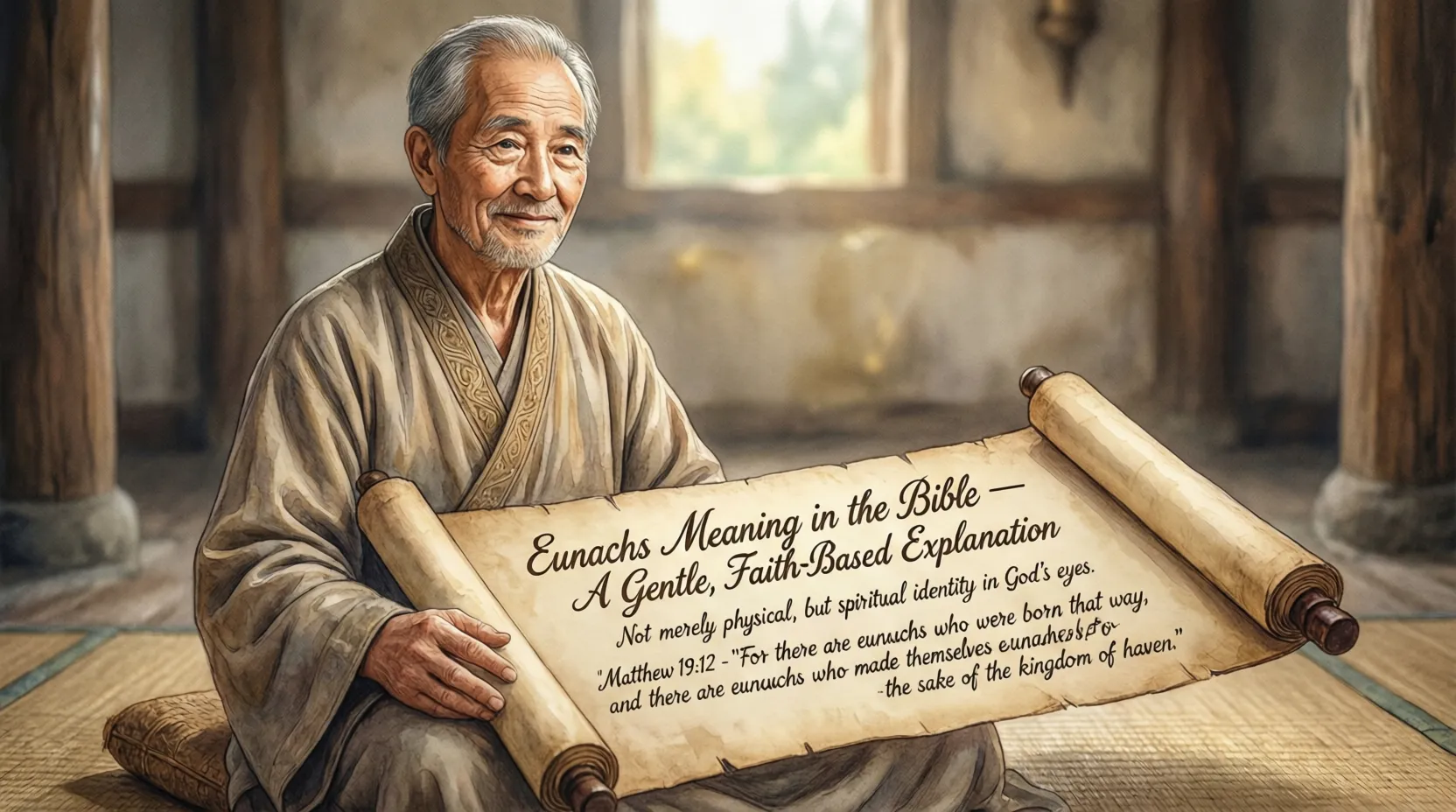
Imagine standing at a palace gate. A quiet servant watches visitors come and go. He is loyal, steady, and unseen by many. In dreams or visions, a figure like this may appear — quiet, different, and full of service. You wake and wonder: What does a eunuch mean in the Bible?
The image can feel strange at first. But the Bible uses the word eunuch in deep and hopeful ways. Sometimes it points to people who were excluded. Other times it points to people chosen by God, set apart for a task, or searching for truth. This article will gently explore eunuchs meaning in the Bible, show key verses, and offer simple guidance for anyone who sees this symbol in a dream or life moment.
Let’s walk through Scripture, feel its heart, and find a peaceful, faithful meaning for this image.
Biblical Meaning of Eunuchs in the Bible
In Scripture, eunuchs appear in several roles. They were often court servants or officials. But the Bible goes beyond the physical role and speaks to the heart.
1. Eunuchs as people in society
Some Bible texts show eunuchs as people who served in palaces and courts. They could be trusted with duty and care. This shows service, loyalty, and role. At the same time, some laws left them outside certain religious assemblies. Deuteronomy records rules that meant some people who were castrated could not enter the congregation (see Deuteronomy 23:1). This can feel like exclusion or loss.
2. Jesus’ words — new meaning and hope
Jesus mentions eunuchs in a surprising way. In Matthew 19:12 he says there are different kinds of eunuchs: those born that way, those made that way by others, and those who choose singleness for the kingdom of heaven. Jesus’ words open a new idea: being set apart for God. For Jesus, the image is not only about loss. It can be about devotion and calling.
3. A promise for the excluded — Isaiah’s welcome
One of the most comforting passages is Isaiah 56:3–5. God promises a place and a lasting name to eunuchs who keep His covenant. The Lord says they will receive a memorial and a name better than sons and daughters. This is powerful — it turns exclusion into belonging. God honors faith and commitment, whatever a person’s social status.
4. The Ethiopian eunuch — an example of seeking and faith
In Acts 8:26–40, Philip meets an Ethiopian eunuch reading Isaiah. The eunuch seeks understanding and asks to be baptized. Philip explains the good news and baptizes him. This story shows a clear message: God’s salvation and acceptance are for all. A eunuch can be a faithful seeker and a follower of Christ.
5. Positive and warning meanings
- Positive meanings: service, devotion, being set apart, acceptance by God, faithful witness, humility.
- Warning meanings: feelings of exclusion, loss, isolation, or a call to address a place of hurt or injustice in your life.
Through these verses, the Bible frames eunuchs with dignity, hope, and inclusion.
Spiritual Significance and Symbolism
When a eunuch appears in a dream or thought, it often points beyond the body to spiritual themes.
Service and stewardship. Eunuchs in the Bible often serve kings. Spiritually, they can symbolize a call to faithful service — working quietly for God or others.
Set apart for God. Some eunuchs are described as chosen or dedicated. This can symbolize a season of devotion, or the need to put God first.
Exclusion turned to honor. Isaiah’s promise reminds us God values the lowly. If you feel unseen, this image can be a gentle nudge of hope: God notices and honors faith.
Search for truth. The Ethiopian eunuch shows curiosity and hunger for God. Seeing a eunuch might point you to seek answers, read Scripture, or ask someone to pray with you.
These symbolic ideas connect to daily life: quiet acts of service, choosing to trust God, or finding belonging in a faith family.
Biblical Interpretations in Dreams or Real Life
If you dream of a eunuch, or meet someone who identifies as one, here are gentle ways to understand that moment:
- Peaceful, respectful setting: The dream may mean God is calling you to quiet service, or to accept a new role with humility. It can be a sign of spiritual maturity.
- Anxious or lonely scene: This might point to feelings of exclusion or unresolved pain. It can be a call to bring those feelings to God in prayer and seek healing.
- A seeker asking questions (like the Ethiopian): This often signals a spiritual awakening. You may be ready for a new step — learning, baptism, or deeper prayer.
- A court or palace image: Might point to influence, responsibility, or a season of careful stewardship in your work or relationships.
Always frame the dream in prayer. Ask God for clarity, and test the feeling the dream leaves you with: peace, conviction, or unrest. Lean on Scripture like Isaiah 56 and Acts 8 for grounding.
Practical Lessons & Faith Insights
- Pray for belonging. If the image brings loneliness, pray Isaiah’s promise into your heart.
- Serve quietly. Small acts of care may be God’s call to you.
- Seek community. Talk with a trusted pastor or friend if the dream stirs difficult emotions.
- Be open to new faith steps. If curiosity rises, read Scripture and ask for baptism or guidance.
Bold takeaway: God honors faith, not status. He calls people to belong and to serve.
Conclusion
The eunuchs meaning in the Bible moves from social label to spiritual hope. Scripture shows both the pain of exclusion and the deep promise of belonging. God sees those who serve quietly, those who feel left out, and those who seek truth. He offers a name, a place, and a lasting hope.
If this symbol touched you, bring it to God in prayer. Let His Word, and the stories of Isaiah and the Ethiopian eunuch, comfort and guide you. Trust that God’s love reaches every heart — and that your faith matters.