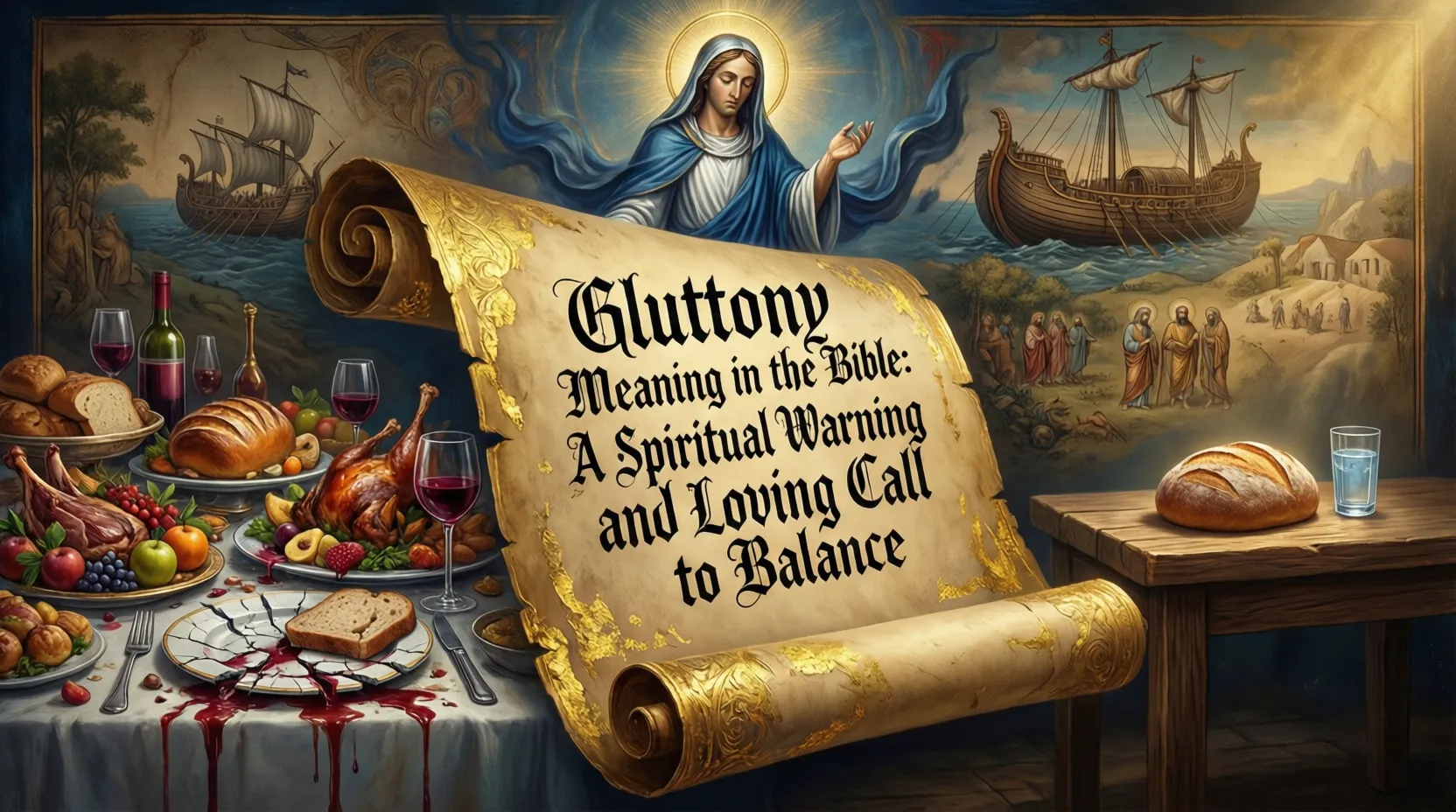
Imagine sitting at a table overflowing with food. Plates are full. Cups never empty. Yet inside, there is still a quiet hunger that food cannot fill. Many people experience this feeling in real life or even in dreams—eating without satisfaction, consuming without peace. It leaves a question behind: Why do I still feel empty?
In the Bible, moments like this are not ignored. They often point to deeper spiritual truths. One such truth is gluttony. While many think gluttony only means eating too much, Scripture paints a much richer and more personal picture. It speaks to the heart, the desires, and the things we lean on for comfort instead of God.
So what is the gluttony meaning in the Bible? Is it just about food, or is there a spiritual message behind it—especially if you have seen it in a dream or felt convicted about it in your life?
The Bible uses gluttony as a gentle but serious warning. It invites us to look at our habits, our cravings, and our faith. More importantly, it calls us back to balance, self-control, and trust in God. Let us explore what Scripture truly teaches and how this message can guide your spiritual journey today.
Biblical Meaning of Gluttony
What Does Gluttony Mean in the Bible?
The gluttony meaning in the Bible goes far beyond overeating. Biblically, gluttony represents excess, lack of self-control, and placing physical desires above spiritual obedience. It is about allowing appetite—whether for food, pleasure, or comfort—to rule the heart.
One clear verse is:
“Do not join those who drink too much wine or gorge themselves on meat.”
(Proverbs 23:20)
This verse is not condemning food itself. Food is a gift from God. Instead, it warns against losing discipline and letting appetite lead to spiritual laziness.
Another strong passage says:
“The glutton and the drunkard will come to poverty.”
(Proverbs 23:21)
Here, gluttony is linked to spiritual and physical loss. When desire controls us, it slowly steals peace, purpose, and clarity.
Gluttony as a Heart Issue, Not Just a Habit
In Scripture, sin often begins in the heart. Gluttony reflects a heart that seeks comfort in creation instead of the Creator. The Apostle Paul explains this clearly:
“Their god is their stomach…their mind is set on earthly things.”
(Philippians 3:19)
This verse reveals the deeper spiritual symbolism of gluttony. It is not about the stomach alone—it is about worship. Whatever we depend on most can quietly become our god.
Gluttony shows up when:
- We eat to escape pain
- We consume to fill loneliness
- We indulge to avoid prayer or reflection
In these moments, food becomes a substitute for God’s presence.
Is Gluttony Always a Sin? Understanding Balance
The Bible never teaches that enjoyment is wrong. Jesus Himself ate meals with others and was even accused falsely of being a glutton (Matthew 11:19). The issue was not His eating, but people’s misunderstanding.
The sin of gluttony appears when there is:
- No moderation
- No gratitude
- No self-control
Scripture praises balance:
“So whether you eat or drink or whatever you do, do it all for the glory of God.”
(1 Corinthians 10:31)
The biblical meaning of gluttony, therefore, is imbalance—when physical desire overpowers spiritual discipline.
Gluttony as a Spiritual Warning
Throughout the Bible, gluttony serves as a warning sign. It points to areas where faith may be weak or where a person is spiritually asleep. Like other sins, it calls not for shame, but for repentance and renewal.
God’s correction is always rooted in love. When Scripture warns against gluttony, it is inviting believers to rediscover:
- Self-control
- Contentment
- Dependence on God
This is not condemnation. It is a loving redirection toward freedom.
Spiritual Significance and Symbolism of Gluttony
Gluttony as a Symbol of Spiritual Hunger
Spiritually, gluttony often symbolizes unmet inner needs. When the soul is not nourished by prayer, truth, and God’s Word, it looks elsewhere for comfort. Food then becomes a symbol of something deeper we crave—peace, love, or security.
Jesus spoke directly to this spiritual hunger:
“Man shall not live on bread alone, but on every word that comes from the mouth of God.”
(Matthew 4:4)
This verse reveals the spiritual message behind gluttony. True satisfaction comes from God, not from consumption.
A Call to Self-Control and Spiritual Growth
In Christian belief, self-control is a fruit of the Spirit:
“The fruit of the Spirit is…self-control.”
(Galatians 5:22–23)
Gluttony highlights areas where this fruit may be lacking. Spiritually, it invites growth, not guilt. It calls believers to walk closer with God and allow the Holy Spirit to guide their desires.
Small daily acts—like mindful eating, prayer before meals, or fasting—can restore balance and deepen faith.
Transformation Through Awareness
Recognizing gluttony is often the first step toward spiritual awakening. It opens the door to transformation. When believers shift focus from consumption to communion with God, peace follows.
Gluttony, when understood spiritually, becomes a teacher. It shows us where healing is needed and where God’s grace wants to work.
Biblical Interpretations of Gluttony in Dreams or Real Life
Seeing Gluttony in Dreams
Dream interpretation in a biblical context often reflects spiritual conditions. Dreaming of overeating, endless food, or feeling sick after eating can symbolize spiritual emptiness, lack of discipline, or emotional dependence.
Such dreams are not meant to scare. They are often gentle nudges from God, inviting reflection and prayer.
Different Dream Scenarios and Meanings
- Eating without satisfaction: Seeking fulfillment outside God
- Overfilled tables: Excess or distraction in life
- Feeling guilt after eating: Conviction leading to repentance
When these dreams are peaceful, they may simply highlight abundance. When they feel heavy or uncomfortable, they often carry a divine message calling for balance.
Gluttony in Real-Life Experiences
In daily life, gluttony can appear as emotional eating, constant indulgence, or ignoring physical limits. Spiritually, these moments invite believers to pause and ask: What am I really hungry for?
Prayer and reflection help bring clarity and healing.
Practical Lessons and Faith Insights
Gluttony teaches believers the beauty of moderation and gratitude. By inviting God into daily habits—especially eating—we restore balance. Simple prayers, mindful choices, and trust in God’s provision help transform appetite into worship. Let food remain a gift, not a master, and let faith guide every desire.
Conclusion
The gluttony meaning in the Bible is not about punishment—it is about restoration. It reminds us that God cares about every part of our lives, even our appetites. Through Scripture, gluttony becomes a gentle call to return to balance, self-control, and trust in Him.
When hunger rises, let it lead you not to excess, but to prayer, faith, and God’s presence. In Him, the soul finds lasting satisfaction, and the heart finds peace.