Imagine sitting quietly with your Bible open or listening to a sermon online. One teacher says something that feels right. Another says the opposite. Your heart feels uneasy, and a quiet question rises within you: “What is the truth?”
This moment of confusion is something many Christians experience. From the early church to today, believers have struggled to understand teachings that sound spiritual but do not fully match God’s Word. The Bible calls these misleading beliefs heresies.
The word heresies may sound harsh or frightening, but its meaning is deeply spiritual and important. It is not just about church arguments or history. It is about protecting faith, guarding truth, and staying close to God’s voice.
Many people search for the heresies meaning in the Bible because they want clarity. They want to know if a message they heard, a thought they felt, or even a dream they experienced aligns with Scripture. They are seeking God’s guidance, not judgment.
The Bible does not speak about heresies to bring fear. Instead, it speaks with love, offering wisdom, correction, and hope. When we understand what heresies mean in the Bible, we learn how to walk in truth, peace, and strong Christian belief.
Let us now explore what the Bible truly teaches about heresies and why this understanding matters for our faith journey.
Biblical Meaning of Heresies in the Bible
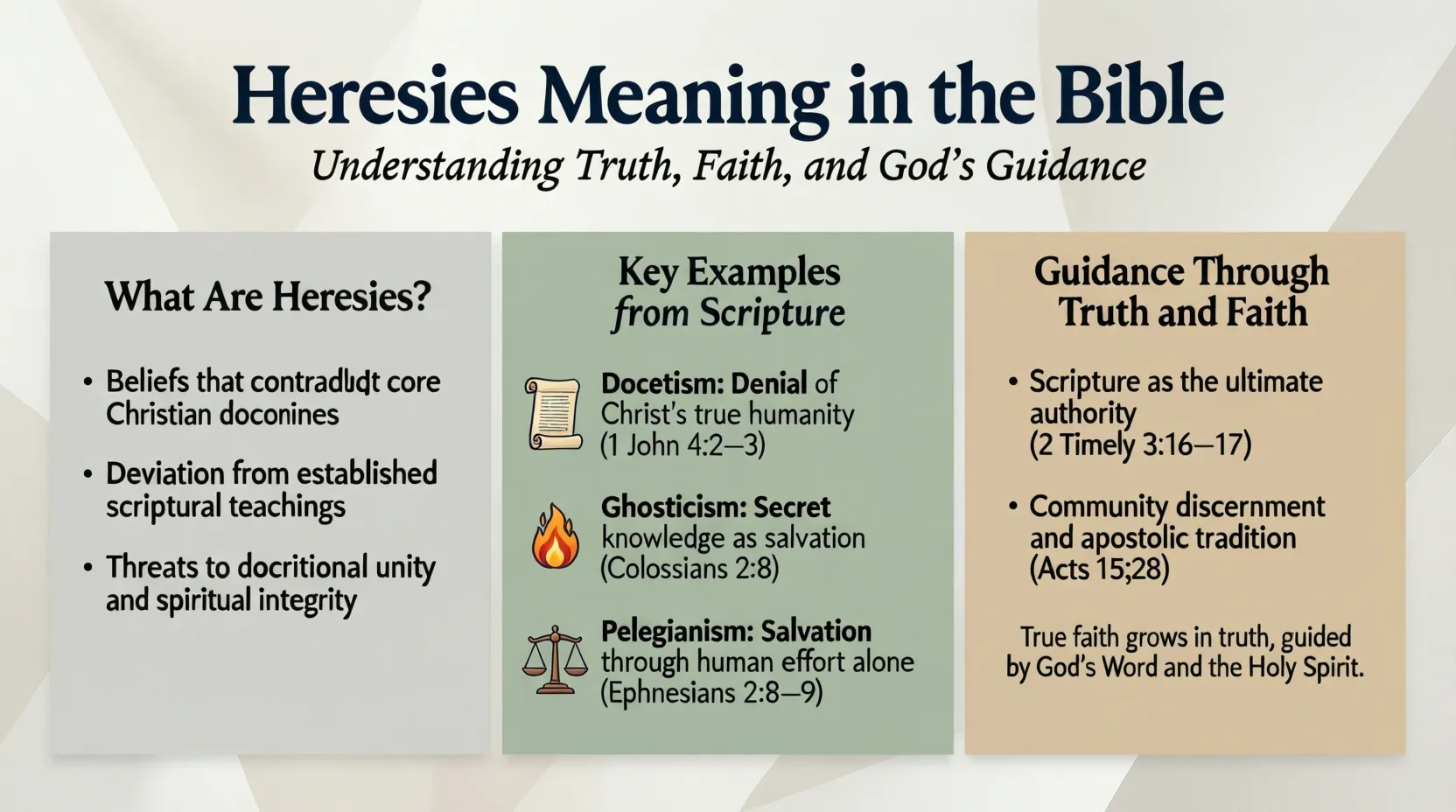
In the Bible, the word heresy comes from a Greek word that means choice or division. In simple terms, heresies are beliefs or teachings that twist God’s truth and lead people away from the heart of the gospel.
The Bible first uses this idea to describe divisions caused by false beliefs. These teachings may sound wise or spiritual, but they do not fully agree with God’s Word.
In Galatians 5:19–21, heresies are listed among actions that harm spiritual life. This shows that heresies are not just ideas; they affect the soul and relationship with God.
The Apostle Peter also warned believers clearly:
“There shall be false teachers among you, who privily shall bring in damnable heresies…”
(2 Peter 2:1)
This verse reveals an important truth. Heresies often enter quietly. They do not always look evil at first. They may include parts of Scripture but remove the true message of Christ.
Another strong warning appears in 1 Timothy 6:3–4, where Paul explains that teachings not aligned with the words of Jesus lead to confusion and pride rather than faith and love.
However, the Bible also reminds us that God allows these moments as tests of the heart. In 1 Corinthians 11:19, Paul writes that divisions reveal who truly remains faithful to the truth.
So, the biblical meaning of heresies is both a warning and a lesson. They warn us to stay grounded in Scripture. They teach us to seek God’s truth with humility, prayer, and discernment.
Spiritual Significance and Symbolism
Spiritually, heresies represent a fork in the road. One path leads toward God’s truth. The other leads toward human ideas, pride, or misunderstanding.
Heresies often grow when people stop listening to God and start trusting only their own wisdom. This is why the Bible urges believers to remain rooted in faith, prayer, and Scripture.
From a spiritual symbolism perspective, heresies reflect a struggle between light and confusion. Truth brings peace and unity. False teaching brings doubt and division.
Many believers experience this in daily life. You may hear a message that feels exciting but leaves your spirit unsettled. That inner discomfort can be the Holy Spirit guiding you back to truth.
Spiritually, recognizing heresy is not about judging others. It is about protecting your heart and staying aligned with God’s voice. When believers choose truth, they grow in spiritual maturity and develop a deeper presence of God in their lives.
Biblical Interpretations in Dreams or Real Life
Sometimes, heresies appear symbolically in dreams or real experiences. A person may dream of being lost, misled, or following the wrong path. These dreams often reflect a spiritual warning rather than fear.
In real life, heresies may show up as constant confusion, inner unrest, or teachings that remove Jesus from the center of faith. When a message causes fear instead of hope, it may be a sign to return to Scripture and prayer.
Peaceful guidance from God always points toward love, humility, and truth. Fearful or prideful teachings often pull believers away from the heart of the gospel.
Prayer and reflection help bring clarity in both dreams and waking life.
Practical Lessons and Faith Insights
The Bible teaches believers to test every teaching through God’s Word. Stay close to Scripture, pray for wisdom, and ask the Holy Spirit for guidance.
Truth brings peace. False teaching brings confusion. Trust God to lead you gently into understanding.
Conclusion
Understanding the heresies meaning in the Bible helps believers stay rooted in truth and faith. Heresies are warnings, not punishments. They remind us to rely on God’s Word and not human ideas.
When you seek truth with humility and prayer, God leads you into clarity, peace, and spiritual growth. Let your heart remain open to His guidance, and trust that God’s truth will always light your path. 🙏