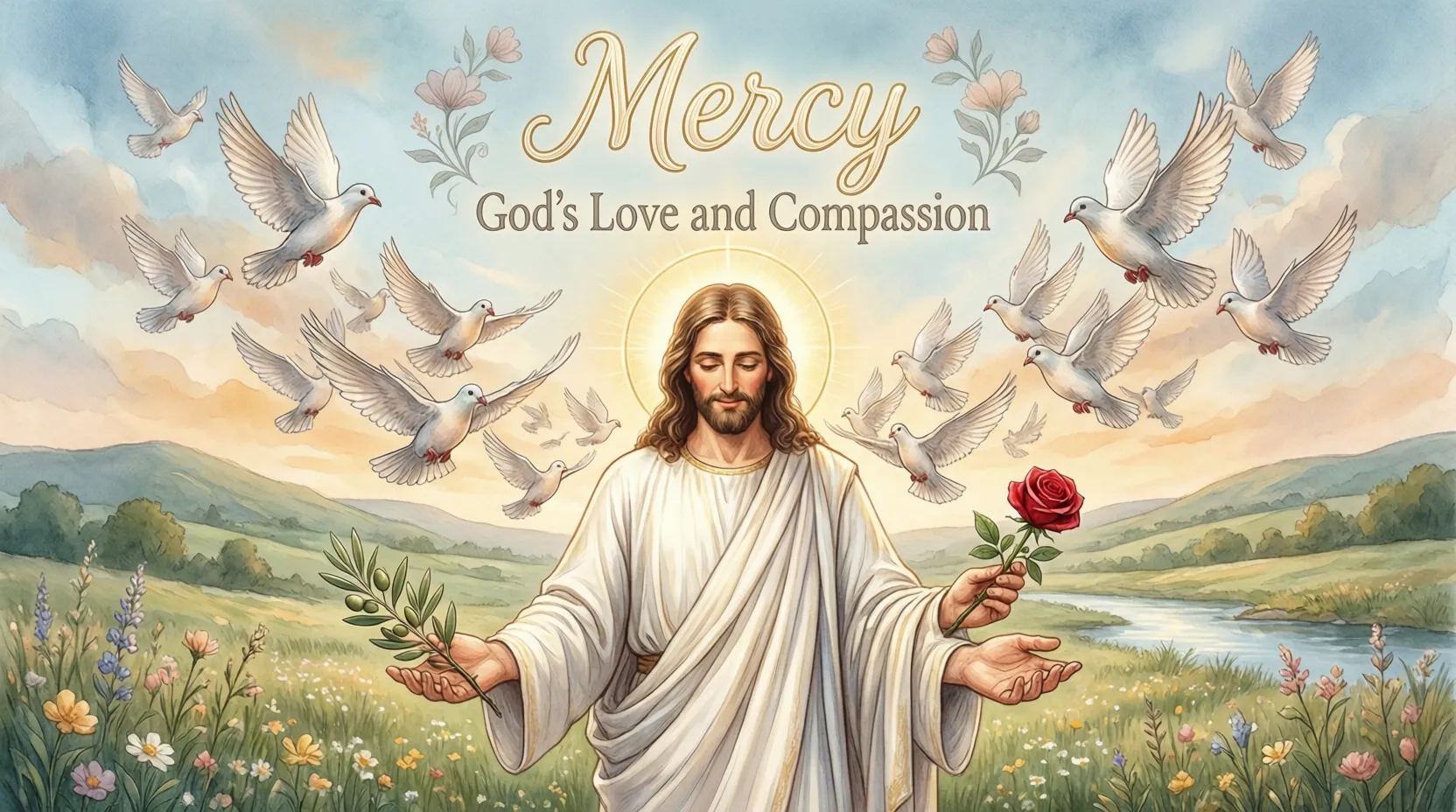
You feel weak. You have failed. Your heart is heavy with regret. You whisper a prayer, unsure if God is still listening. Then, deep inside, you feel peace instead of judgment. Comfort instead of fear. That quiet feeling is mercy.
Many people search for the meaning of mercy in the Bible because they feel it during prayer, in hard seasons, or even in dreams. Mercy often appears when we least deserve it and need it the most. It feels like a warm hand reaching down when we have fallen.
But what does mercy truly mean in God’s Word?
Is it forgiveness?
Is it kindness?
Is it God giving us another chance?
The Bible speaks of mercy again and again. It shows mercy as a powerful divine message of love, patience, and hope. Mercy is not weakness. It is strength guided by compassion.
When we understand mercy through Scripture, we see God’s heart more clearly. We also learn how mercy shapes our faith, our prayers, and our daily walk with Him.
Let us gently explore the biblical meaning of mercy and discover why it is one of God’s greatest gifts.
Biblical Meaning of Mercy in the Bible
The meaning of mercy in the Bible goes deeper than simple kindness. Mercy is when God chooses love over punishment and grace over judgment.
In the Old Testament, the Hebrew word for mercy often means steadfast love or deep compassion. It describes God’s loyal love for His people, even when they turn away from Him.
One of the most powerful Bible verses about mercy says:
“The Lord is merciful and gracious, slow to anger and abounding in steadfast love.”
— Psalm 103:8
This verse shows that mercy flows from God’s character. He is patient. He understands human weakness. He does not rush to punish.
Mercy also appears clearly in the New Testament through Jesus Christ. Jesus did not come to condemn the world but to save it. His life, death, and resurrection are the greatest acts of mercy ever shown.
The Bible says:
“Because of the Lord’s great love we are not consumed, for His mercies never fail. They are new every morning.”
— Lamentations 3:22–23
This tells us something beautiful. God’s mercy is fresh each day. Yesterday’s mistakes do not cancel today’s grace.
However, the Bible also shows a warning side of mercy. Mercy should not be ignored or taken lightly. God’s mercy invites repentance and change.
Jesus said:
“Blessed are the merciful, for they will be shown mercy.”
— Matthew 5:7
This teaches us that mercy is not only received but also given. When we refuse to show mercy to others, we close our hearts to God’s work within us.
In biblical symbolism, mercy often represents:
- God’s forgiving nature
- His covenant love
- His desire to restore, not destroy
- His gentle guidance back to truth
The biblical meaning of mercy is clear. Mercy is God saying, “I see your brokenness, and I still choose you.”
Spiritual Significance and Symbolism
Spiritually, mercy is a sign of transformation. It marks moments when God is shaping the heart.
Mercy teaches humility. It reminds us that we all need grace. No one stands strong on their own.
When you experience mercy, it often points to a spiritual awakening. God may be inviting you to let go of guilt, fear, or self-condemnation. Mercy tells you that God’s love is bigger than your past.
In daily life, mercy appears in small ways:
- A second chance when you expected rejection
- Peace after confession in prayer
- Comfort during grief
- Forgiveness that feels undeserved
Spiritually, mercy also symbolizes the presence of God walking with you through pain. It tells you that you are not abandoned.
For Christians, mercy encourages growth. It teaches us to forgive others, even when it hurts. It reminds us to reflect Christ’s heart in our actions.
When we choose mercy, we mirror God’s character. We become living examples of His love.
Mercy is not just something God does. It is something God invites us to live.
Biblical Interpretations in Dreams or Real Life
Many people experience mercy through dream interpretation or strong emotions during prayer. In dreams, mercy often appears as rescue, forgiveness, light, or protection.
If you dream of being forgiven, spared, or helped, it may symbolize God’s reassurance. He may be reminding you that you are still under His care.
Peaceful dreams involving mercy often reflect:
- Healing after spiritual struggle
- Release from guilt
- God’s approval and comfort
More intense or emotional dreams may suggest a call to repentance. God’s mercy sometimes wakes us up spiritually so we can change direction.
In real life, mercy often shows up during failure. A door stays open. A relationship heals. A burden lifts during prayer.
These moments are spiritual messages. They remind us to trust God’s timing and not lose hope.
When mercy appears, the best response is prayer, gratitude, and reflection.
Practical Lessons & Faith Insights
- Receive mercy with humility, not shame
- Show mercy to others as God shows it to you
- Pray for a merciful heart during hard moments
- Trust God’s grace even when you feel unworthy
Mercy is God’s way of drawing you closer, not pushing you away.
Conclusion
The meaning of mercy in the Bible is a message of hope, love, and restoration. Mercy shows God’s heart toward humanity. It tells us that failure is not the end and forgiveness is always possible.
When mercy touches your life, pause and listen. God may be guiding you, healing you, or calling you to extend that same grace to others.
Let mercy lead you back to prayer, faith, and trust in God’s unfailing love.