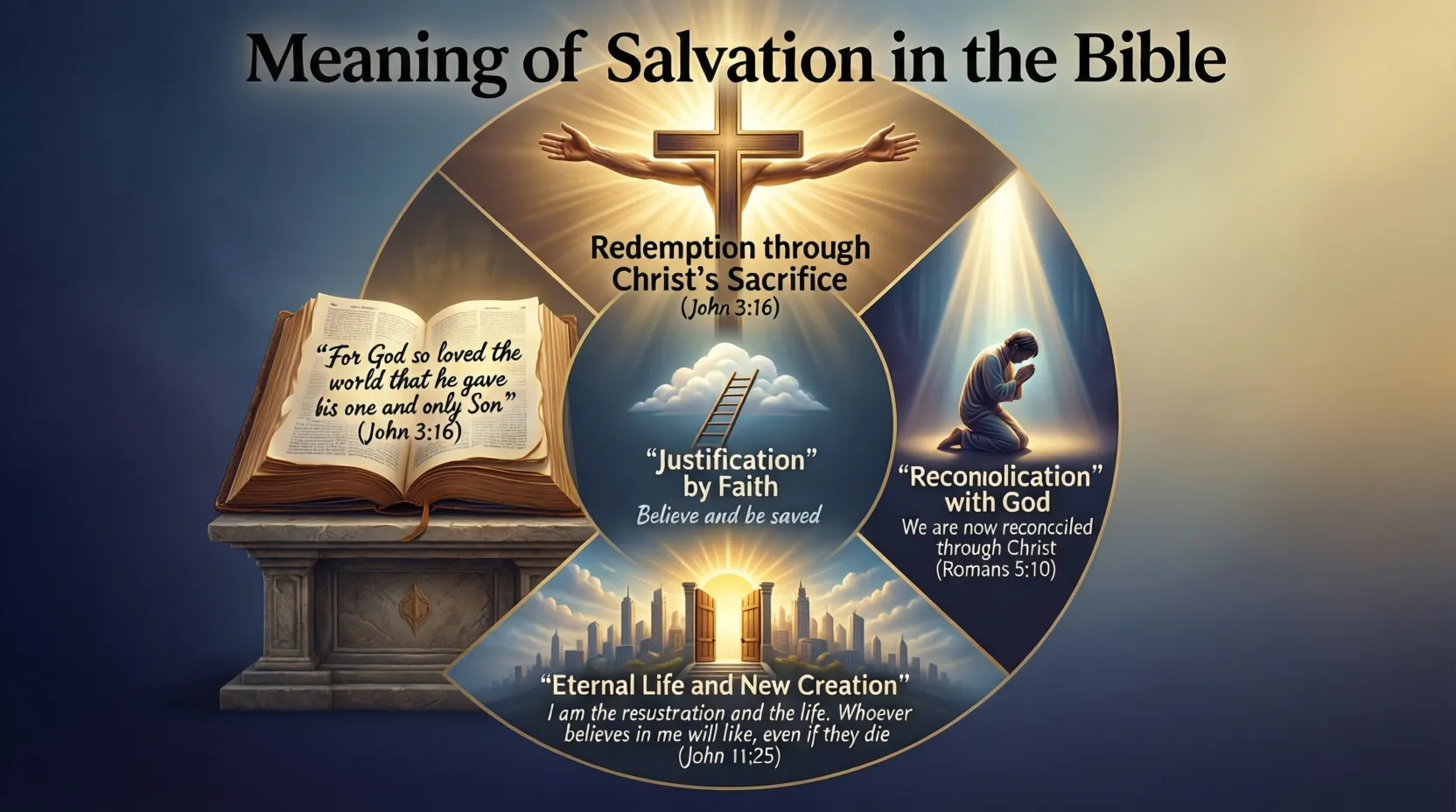
Picture a person lost in a dark valley. The path is unclear. Fear feels heavy. Every step feels unsure. Then, in the distance, a light appears. A voice calls out. A hand reaches forward and guides them to safety.
This image helps many believers understand the meaning of salvation in the Bible.
People often search for this meaning during emotional moments. Some feel it after a powerful prayer. Others experience it during a hard season, a dream, or a sudden spiritual awakening. They may ask, “Why do I feel saved?” or “What is God trying to show me?”
In the Bible, salvation is not just about heaven. It is about rescue, hope, and restoration. It is about God stepping into human weakness with love and mercy. Salvation speaks to the heart that feels broken, tired, or far from God.
Many Christians feel peace when they understand salvation. Others feel comfort knowing they are not alone. The Bible uses salvation to remind us that God sees us, loves us, and wants to restore us.
So what is the true biblical meaning of salvation? How does Scripture explain it? And what spiritual message does it hold for your life today?
Let us explore this powerful truth through God’s Word and faith.
Biblical Meaning of Salvation in the Bible
The meaning of salvation in the Bible comes from the idea of being saved, delivered, or rescued by God. In both the Old and New Testaments, salvation shows God stepping in to protect His people.
Salvation as Rescue
In the Old Testament, salvation often meant physical rescue.
“The Lord is my strength and my shield.”
(Psalm 28:7)
Here, salvation shows God as a protector. He saves His people from danger, enemies, and fear.
But as the Bible unfolds, salvation takes on a deeper meaning.
Salvation From Sin
In the New Testament, salvation focuses on being saved from sin and spiritual death.
“For all have sinned and fall short of the glory of God.”
(Romans 3:23)
Sin creates distance between people and God. Salvation restores that broken relationship.
“For the wages of sin is death, but the gift of God is eternal life in Christ Jesus our Lord.”
(Romans 6:23)
This verse shows both warning and hope. Sin leads to death, but salvation leads to eternal life.
Salvation Through Jesus Christ
Christian belief teaches that salvation comes only through Jesus.
“I am the way and the truth and the life. No one comes to the Father except through me.”
(John 14:6)
Jesus lived a perfect life, died for humanity’s sins, and rose again. Through Him, believers receive forgiveness and new life.
“Salvation is found in no one else.”
(Acts 4:12)
This shows the heart of the Gospel. Salvation is not earned by good works. It is received through faith.
Salvation as Grace
One of the most comforting teachings in the Bible is that salvation is a gift of grace.
“For it is by grace you have been saved, through faith.”
(Ephesians 2:8)
Grace means undeserved love. God saves because He loves—not because people are perfect.
A Loving Warning
The Bible also reminds believers not to ignore salvation.
“How shall we escape if we ignore so great a salvation?”
(Hebrews 2:3)
This verse is not meant to frighten. It gently calls the heart to respond to God’s love.
Overall, the biblical symbolism of salvation reveals forgiveness, rescue, peace, and hope. It shows a God who saves willingly and lovingly.
Spiritual Significance and Symbolism
The spiritual symbolism of salvation speaks to inner change. It represents a heart turning toward God.
Salvation is often linked to:
- Spiritual awakening
- Transformation
- New beginnings
- Freedom from guilt
When someone experiences salvation, they may feel lighter. Fear loosens its grip. Hope returns.
Salvation as New Life
The Bible describes salvation as being made new.
“If anyone is in Christ, the new creation has come.”
(2 Corinthians 5:17)
This means old burdens no longer define the believer. Salvation gives a new identity rooted in God’s love.
Salvation and Daily Faith
Salvation is not only a moment—it is a walk of faith.
Believers grow through prayer, Scripture, and trust in God’s guidance. Even during struggles, salvation reminds them they belong to God.
In spiritual symbolism, salvation reflects God’s presence walking with His people through every season.
Biblical Interpretations in Dreams or Real Life
Many people feel drawn to the meaning of salvation in the Bible after a dream or spiritual experience.
In dreams, salvation may appear as:
- Being rescued from danger
- Finding light in darkness
- Being guided to safety
These images often reflect God’s protection and guidance.
In real life, salvation may be felt during prayer, worship, or moments of deep reflection. Some feel peace. Others feel conviction followed by relief.
If the experience feels calm, it often signals reassurance. If it feels urgent, it may be a call to return to faith or renew commitment.
The Bible encourages believers to seek understanding through prayer.
“Your word is a lamp for my feet.”
(Psalm 119:105)
Dreams and experiences should always lead closer to God, not away from Him.
Practical Lessons & Faith Insights
- Trust God’s grace, not perfection
- Reflect on salvation through prayer
- Stay grounded in Scripture
- Walk daily in faith and humility
Salvation reminds believers that God’s love is steady and patient.
Conclusion
The meaning of salvation in the Bible is a powerful message of rescue, forgiveness, and eternal hope. Through Jesus Christ, God offers new life, peace, and restoration. Salvation is not just about the future—it transforms the present.
As you reflect, let this truth guide your heart. Pray for wisdom. Trust God’s timing. And rest in the promise that His saving love is always near.