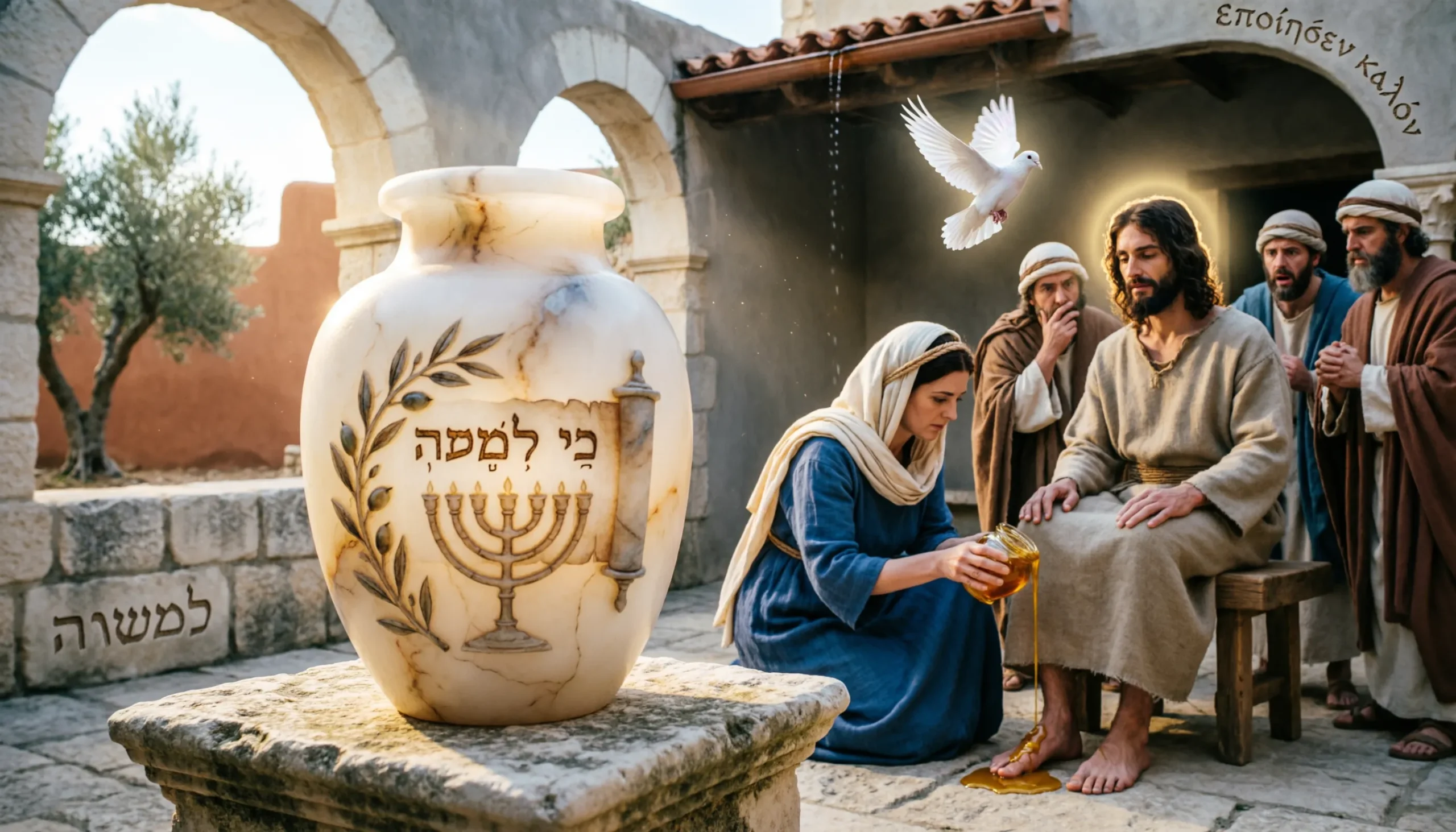
Imagine holding a small, beautiful jar, smooth and precious. It feels heavy, not just in your hands, but in your heart. Inside it is something valuable—something saved for a special moment. In the Bible, this image comes alive through alabaster.
Many people come across the word alabaster while reading Scripture, hearing a sermon, or even seeing it in a dream or spiritual moment. It often leaves them wondering: Why does this matter? Why did God include this detail?
The Bible is full of symbols, and alabaster is not mentioned by accident. It appears during one of the most emotional moments in the life of Jesus. A woman brings an alabaster jar and pours out its contents as an act of love and worship. This moment is quiet, powerful, and deeply personal.
For many believers today, alabaster represents something they feel in their own lives—a call to surrender, deep devotion, or a moment of spiritual awakening. It can also show up in dreams, stirring emotions of sacrifice, repentance, or love for God.
So what does alabaster really mean in the Bible? What is the spiritual message behind it? And how does it connect to your faith journey today?
Let’s explore the alabaster meaning in the Bible and uncover the hope, faith, and divine guidance it carries.
Biblical Meaning of Alabaster in the Bible
In biblical times, alabaster was a soft, white stone used to make jars and containers. These jars often held very expensive perfume or oil. Because alabaster kept the fragrance pure, it was chosen for items of great value.
The most powerful story appears in Matthew 26:6–13, Mark 14:3–9, and Luke 7:36–50.
A woman comes to Jesus with an alabaster jar of costly perfume. Without saying much, she breaks the jar and pours the perfume on Him. Some people around her are upset. They say it is a waste. But Jesus sees it differently.
“She has done a beautiful thing to me.” (Mark 14:6)
What alabaster symbolizes in the Bible
Alabaster represents sacrificial love.
The jar was expensive. Once broken, it could not be used again. This shows total surrender. The woman gave everything, holding nothing back.
Alabaster reflects pure worship.
Her act was not loud or proud. It was quiet and heartfelt. This teaches that true worship comes from love, not appearance.
Alabaster points to repentance and forgiveness.
In Luke’s account, the woman is described as sinful. Her action shows deep sorrow, humility, and faith. Jesus responds with forgiveness and peace.
“Your faith has saved you; go in peace.” (Luke 7:50)
Alabaster honors the presence of God.
She recognized Jesus as holy. Pouring the perfume was a way of saying, “You are worth everything I have.”
A gentle warning within the story
The disciples focused on money and logic. They missed the spiritual meaning of the moment. This reminds us that it is easy to judge worship when we don’t understand someone’s heart.
The alabaster meaning in the Bible teaches that God values love, faith, and intention more than rules or appearances.
Spiritual Significance and Symbolism
Spiritually, alabaster speaks to the inner life of a believer. It asks a quiet question: What are you holding back from God?
The jar represents the heart. The perfume inside represents our love, prayers, pain, and hope. Breaking the jar means opening our hearts fully before God.
Alabaster symbolizes transformation.
The perfume could only be released when the jar was broken. In the same way, spiritual growth often comes through surrender. God brings beauty even through brokenness.
Alabaster reflects obedience and trust.
The woman did not wait for approval. She trusted her calling. This reminds us to follow God’s leading, even when others don’t understand.
Alabaster points to spiritual awakening.
Many believers feel drawn to this symbol during times of prayer, repentance, or renewal. It can mark a moment when faith becomes deeply personal.
In daily life, alabaster moments may look like:
- Choosing forgiveness instead of anger
- Giving generously when it feels hard
- Praying honestly from the heart
These acts may seem small, but to God, they are fragrant offerings of faith.
Biblical Interpretations in Dreams or Real Life
Some Christians encounter alabaster in dreams, visions, or strong impressions during prayer. While dreams should always be tested through Scripture and prayer, alabaster often carries a gentle and holy message.
Seeing an alabaster jar in a dream
This may symbolize something precious God has placed in you—a calling, gift, or season of devotion.
Breaking an alabaster jar
This often points to surrender. God may be inviting you to release fear, pride, or control and trust Him fully.
Pouring perfume from alabaster
This can represent worship, repentance, or deep prayer rising before God.
Fear or loss connected to the jar
Sometimes it reflects worry about giving too much. God may be offering reassurance that nothing given to Him is ever wasted.
Always bring dreams back to prayer and the Word. God’s messages are rooted in peace, love, and truth, not fear.
Practical Lessons & Faith Insights
The alabaster meaning in the Bible teaches us to love God without holding back. Offer Him your prayers, your struggles, and your gratitude. True worship flows from the heart. Trust that when you give yourself to God, He turns every act of faith into a blessing.
Conclusion
The alabaster meaning in the Bible is a beautiful picture of sacrifice, devotion, and pure love. It reminds us that God sees the heart behind every offering. Whether in Scripture, prayer, or personal reflection, alabaster points to a faith that is honest and deeply surrendered. May this symbol encourage you to draw closer to God, trusting that your love and worship are precious in His sight.