Have you ever met someone whose name seemed to fit their personality perfectly? Or perhaps while reading the Bible, you noticed that many names carry deep meanings and wondered why they matter so much.
Imagine a young mother choosing a name for her child. She searches through Scripture, hoping to find a name that reflects faith, strength, wisdom, or God’s love. As she reads, she discovers that Biblical names are more than labels. They often reveal a person’s purpose, character, or relationship with God.
Throughout the Bible, names are powerful. God sometimes changed people’s names to mark a new season in their lives. A name could reflect a blessing, a promise, or even a divine calling. From Abraham and Sarah to Peter and Paul, names often tell a deeper story about God’s plan.
Many Christians today are drawn to Biblical names because they carry rich spiritual meaning. Some people encounter certain names in dreams, prayers, or daily life and wonder if there is a spiritual message behind them.
So what is the Biblical names meaning, and why are names so important in Scripture? The answer reveals beautiful truths about God’s guidance, identity, and purpose for His people.
Biblical Meaning of Biblical Names
In the Bible, a name is much more than a way to identify someone. Names often reveal a person’s character, destiny, or role in God’s plan.
Names Reflect Identity
The Bible teaches that God knows each person deeply. A name can represent who someone is and what they are called to become.
In Isaiah 43:1, God says:
“I have called you by name; you are mine.”
This verse shows the personal relationship God has with His people. Being called by name signifies belonging, love, and divine care.
When studying Biblical names meaning, we discover that many names point to important spiritual truths.
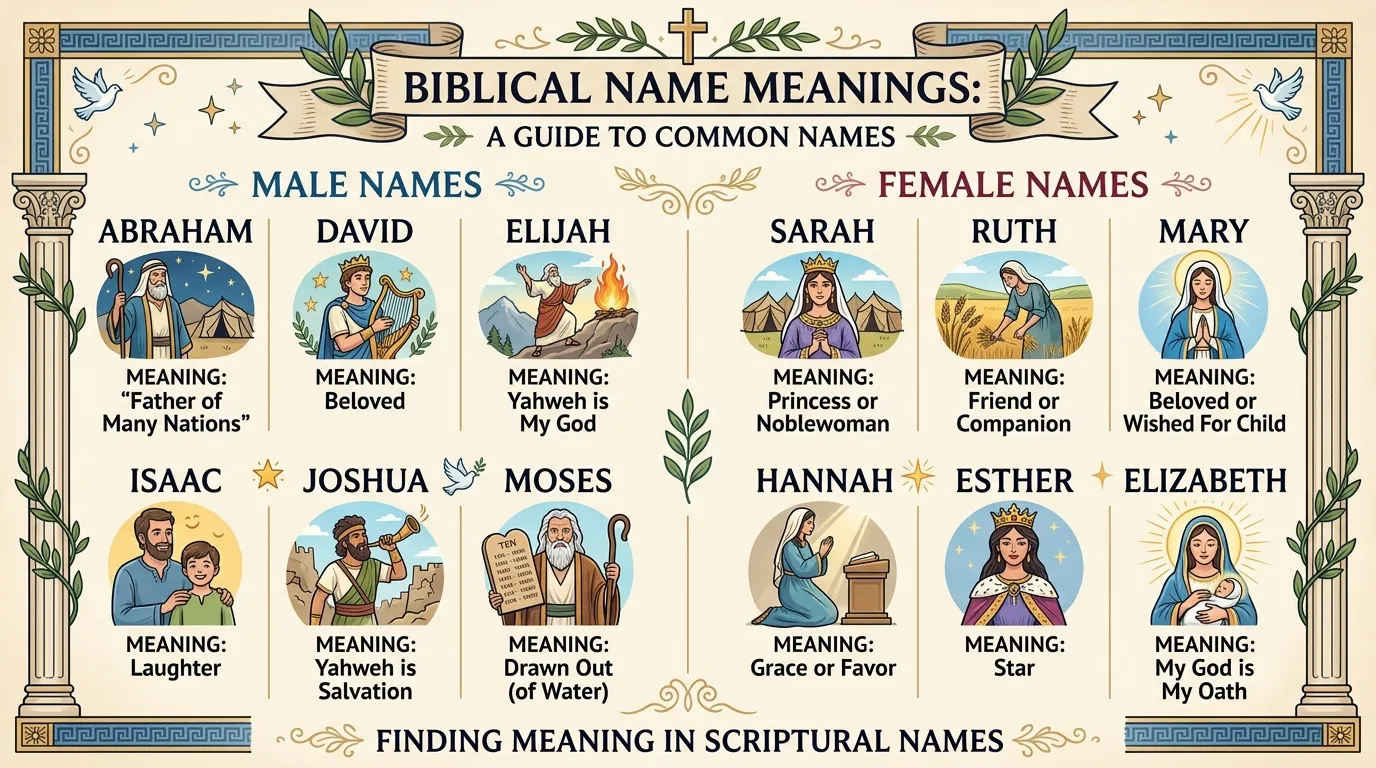
Abraham: Father of Many Nations
One of the most famous examples is Abraham.
Originally, his name was Abram, meaning “exalted father.” Later, God changed it to Abraham, meaning “father of many nations.”
This change was not random. It reflected God’s promise that Abraham would become the father of countless descendants.
The name itself became a symbol of faith, promise, and God’s covenant.
Sarah: Princess
God also changed Sarai’s name to Sarah.
Sarah means “princess.”
This new name reflected her special place in God’s plan and the blessings that would come through her family line.
Her story reminds believers that God can transform ordinary lives into extraordinary testimonies.
Jacob and Israel
Jacob’s name means “supplanter” or “one who grasps.”
For much of his life, Jacob struggled with deception and conflict. But after a powerful encounter with God, his name was changed to Israel.
Israel means “one who struggles with God” or “God prevails.”
This change symbolized spiritual transformation and a new identity.
Peter: The Rock
In the New Testament, Jesus changed Simon’s name to Peter.
Peter means “rock.”
Jesus said in Matthew 16:18:
“You are Peter, and on this rock I will build my church.”
Although Peter had weaknesses, Jesus saw the faithful leader he would become.
This shows that God often sees our future potential before we do.
Jesus: The Savior
Perhaps the most important Biblical name is Jesus.
The name Jesus means “The Lord saves.”
The angel told Joseph in Matthew 1:21:
“You shall call his name Jesus, for he will save his people from their sins.”
This name perfectly describes Christ’s mission and God’s love for humanity.
Positive Meanings of Biblical Names
Many Biblical names symbolize:
- Hope
- Faith
- Blessing
- Protection
- Wisdom
- God’s presence
- Divine purpose
- Spiritual growth
These meanings remind believers that God has a plan for every life.
Warning Meanings in Some Names
Not all Biblical names carry positive lessons.
Some names reflect hardship, rebellion, or sorrow. Yet even these names often point to God’s mercy and redemption.
For example, Naomi called herself Mara, meaning “bitter,” after experiencing great loss (Ruth 1:20). Yet God later restored joy to her life.
This teaches that difficult seasons do not have the final word. God’s grace can transform pain into hope.
Spiritual Significance and Symbolism
The spiritual significance of Biblical names goes beyond history. They remind us of God’s ongoing work in our lives.
Names and Divine Purpose
Many names in Scripture reveal a person’s calling.
When God changed someone’s name, it often marked a new chapter. This symbolism teaches Christians that God can transform identity and purpose.
Just as Abram became Abraham, believers today experience change through faith.
Names and Spiritual Transformation
A name change in the Bible often symbolizes:
- A fresh start
- Spiritual awakening
- Growth in faith
- God’s promises
- New direction
This powerful biblical symbolism reminds Christians that God is still shaping lives today.
Names as Reminders of God’s Character
Some Biblical names reveal qualities of God Himself.
Examples include:
- Emmanuel — “God with us”
- Elijah — “My God is Yahweh”
- Daniel — “God is my judge”
- Joshua — “The Lord is salvation”
These names point believers back to God’s nature and faithfulness.
Everyday Application
Imagine facing uncertainty at work, school, or home.
Reading about Biblical names can remind you that God knows you personally. He sees your struggles, your dreams, and your future.
Just as God called people by name throughout Scripture, He continues to guide His children today through prayer, faith, and His Word.
Biblical Interpretations in Dreams or Real Life
Sometimes people dream about a specific Biblical name or repeatedly encounter a name in daily life.
In Christian dream interpretation, names can carry symbolic meaning.
Dreaming of a Biblical Name
If you dream of a Biblical name, consider:
- The meaning of the name
- The Bible character connected to it
- Your current spiritual situation
- What God may be teaching you
For example, dreaming of Peter may symbolize faith and spiritual leadership.
Dreaming of Abraham could represent trust in God’s promises.
Hearing a Name Repeatedly
Sometimes a certain name appears repeatedly in conversations, Bible study, or prayer.
While not every occurrence is a divine sign, it may encourage deeper reflection on God’s message.
Prayer and Scripture should always guide interpretation.
Peaceful vs. Troubling Experiences
A peaceful encounter with a Biblical name may symbolize:
- Comfort
- Guidance
- Encouragement
- God’s presence
A troubling experience may invite:
- Self-examination
- Prayer
- Spiritual growth
- Dependence on God
The key is to seek wisdom through Scripture rather than relying solely on personal feelings.
Staying Grounded in Faith
Christians should remember that God’s primary guidance comes through His Word.
Names can inspire reflection, but Scripture remains the foundation for understanding any spiritual message.
Practical Lessons & Faith Insights
The meaning of Biblical names teaches several powerful lessons:
- God knows you personally.
- Your identity is found in Christ.
- God can transform your story.
- Every season has purpose.
- Prayer brings clarity and guidance.
When you encounter a meaningful Biblical name, take time to pray and reflect on what God may be teaching you through His Word.
Conclusion
The Biblical names meaning reveals far more than simple definitions. Throughout Scripture, names reflect identity, purpose, faith, transformation, and God’s loving involvement in human lives.
From Abraham and Sarah to Peter and Jesus, names often carry a profound spiritual message that points to God’s promises and His plan for His people.
Whether you are studying Biblical names, encountering them in dreams, or choosing a meaningful name for a child, let them remind you of this beautiful truth: God knows your name, loves you deeply, and continues to guide your journey with hope, grace, and purpose. Trust Him, seek His wisdom, and walk forward in faith.