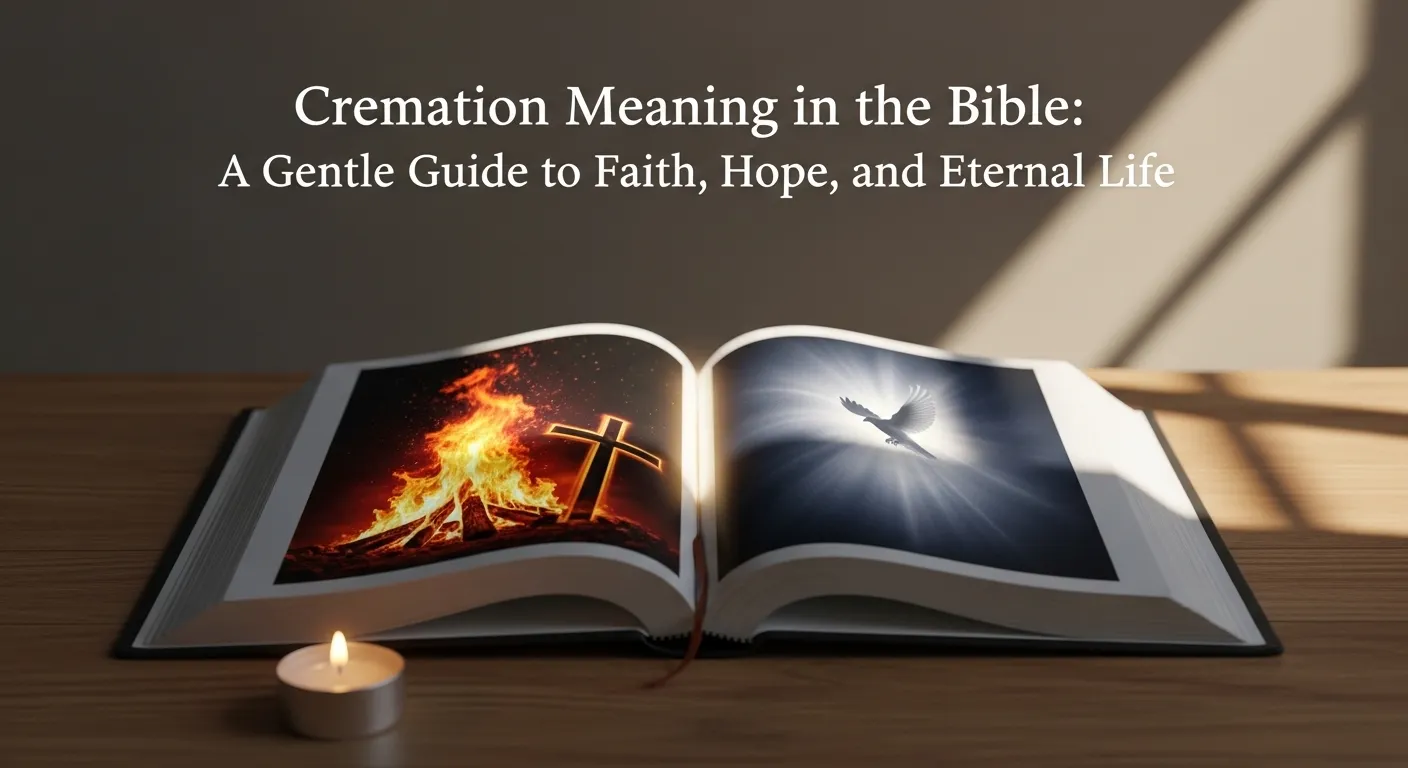
Imagine standing at a quiet place, watching a flame rise softly into the sky. The fire moves gently, yet it feels powerful. In that moment, many people wonder about life, death, and what comes after. Some may ask, “What does cremation mean in the Bible?”
Cremation can bring deep emotions. It can feel confusing, even heavy. You may have seen it in real life, or maybe in a dream. You may be searching for comfort, truth, and God’s message.
The Bible does not always speak directly about modern practices like cremation. But it does speak clearly about the body, the soul, and eternal life. It gives us peace when we feel unsure.
So, what is the Christian meaning of cremation? Is it right or wrong? Does it affect our place with God?
Let’s explore the biblical symbolism, spiritual meaning, and divine message behind cremation — and find hope in God’s promises.
Biblical Meaning of Cremation
The cremation meaning in the Bible is not simple, but it is clear in one way: God cares more about the soul than the body.
In the Bible, most people were buried, not cremated. For example:
- Abraham was buried (Genesis 25:9)
- Moses was buried by God (Deuteronomy 34:5-6)
- Jesus was placed in a tomb (Matthew 27:59-60)
Burial was the common practice. It showed respect and rest.
However, the Bible does mention burning bodies in some cases. Often, it was linked to judgment or shame, not honor:
- Achan and his family were burned after sin (Joshua 7:25)
- Some wicked kings faced burning (2 Chronicles 21:19)
Because of this, some people feel cremation may carry a negative meaning. But we must be careful. These cases were about punishment, not normal death care.
Now, here is the key truth:
“Dust you are and to dust you will return.” (Genesis 3:19)
This verse shows that the body returns to the earth in any form — burial or cremation. Over time, both lead to the same end: the body fades, but the soul lives on.
Another powerful truth comes from the New Testament:
“The body that is sown is perishable, it is raised imperishable.” (1 Corinthians 15:42)
This means our physical body is temporary. God promises a new, eternal body. Cremation does not stop this. God’s power is greater than fire, time, or dust.
So what does cremation mean spiritually?
- It can represent the temporary nature of the body
- It reminds us that life on earth is not the end
- It points us to resurrection and eternal hope
In Christian belief, cremation does not block salvation. It does not separate us from God. What matters most is faith in Jesus Christ.
Spiritual Significance and Symbolism
Cremation holds deep spiritual symbolism when seen through faith.
Fire in the Bible often represents:
- Purification (Malachi 3:2-3)
- God’s presence (Exodus 3:2 — the burning bush)
- Transformation
So, in a symbolic way, cremation can reflect a transition — not an end.
Think of it like this:
A seed must break before it grows. In the same way, the body passes away, but the soul moves forward into God’s presence.
Cremation can remind us:
- This life is not our final home
- God is preparing something greater and eternal
- Death is a doorway, not a stop
In daily life, this truth brings peace. When we lose someone, we may feel pain. But faith tells us:
They are not gone — they are with God.
It also teaches us to live with purpose. If the body is temporary, then what matters most is:
- Faith
- Love
- Obedience to God
Cremation, in this sense, becomes a quiet reminder of spiritual awakening and eternal life.
Biblical Interpretations in Dreams or Real Life
If you see cremation in a dream, it may carry a spiritual message.
A peaceful cremation scene may mean:
- Letting go of the past
- Healing from pain
- A fresh start in faith
It can be a sign that God is helping you release something old so you can grow.
A fearful or intense cremation dream may mean:
- Inner struggle
- Fear of loss or change
- A call to trust God more deeply
In real life, experiencing cremation (such as at a funeral) can stir deep thoughts. It may lead you to reflect on:
- Your relationship with God
- The meaning of life and death
- The hope of eternity
In all cases, the Bible guides us back to peace:
God is in control. Life continues beyond death.
Prayer helps bring clarity. When confused, ask God for guidance and comfort.
Practical Lessons & Faith Insights
- Focus on the soul, not just the body
- Trust God’s promise of resurrection and eternal life
- Let cremation remind you that life is short but meaningful
- Stay close to God through prayer and faith
Conclusion
The cremation meaning in the Bible is not about fear — it is about understanding life beyond the physical world. While burial was common in Scripture, cremation does not take away God’s promise of eternal life.
At its heart, this topic points to one truth:
Our hope is not in the body, but in God.
Whether in life, death, burial, or cremation — God’s love remains the same.
So hold on to faith. Trust His plan. And remember, in Christ, every ending becomes a new beginning.