Imagine receiving a letter written with love, care, and deep concern for your spiritual growth. Not rushed. Not casual. But thoughtful—meant to guide, correct, encourage, and strengthen you in faith.
This is how the epistles in the Bible were first received.
Many believers come across the word epistle while reading Scripture and pause. It sounds formal. Ancient. Maybe even distant. Yet these writings are some of the most personal and practical messages in the entire Bible.
So what does epistle really mean in the Bible? Why did God choose letters to shape Christian belief and daily living? And how do these writings still speak to us today?
If you’re searching for the epistle meaning in the Bible, you’re likely seeking clarity, spiritual direction, or reassurance that God still speaks into everyday life. Let’s explore this gently, through Scripture and faith.
Biblical Meaning of Epistle in the Bible
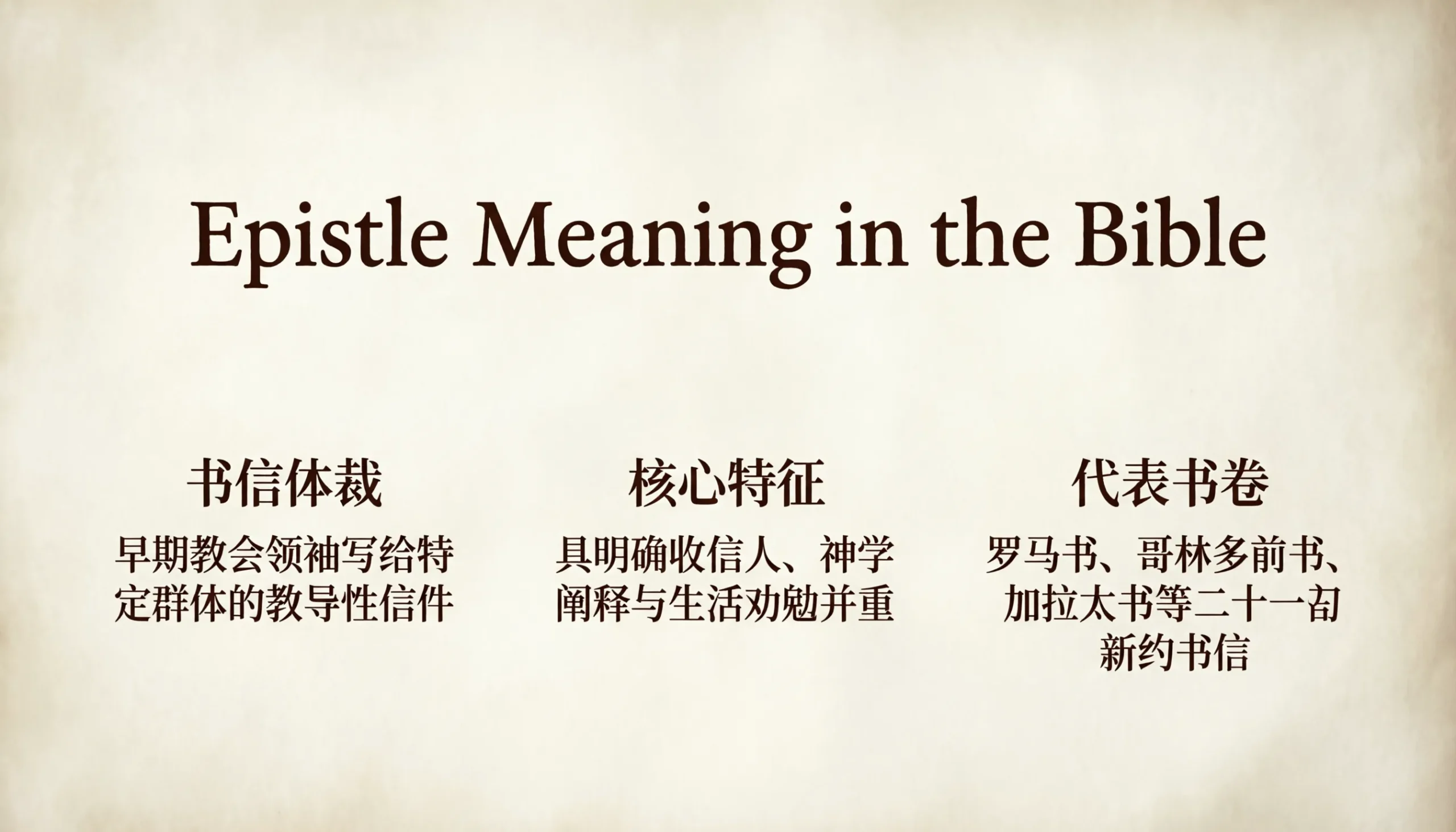
The word epistle simply means “letter.” In the Bible, an epistle is a written message sent to a church, group of believers, or individual, offering instruction, encouragement, correction, and spiritual truth.
Most New Testament epistles were written by:
- Paul
- Peter
- James
- John
- Jude
“Paul, an apostle of Christ Jesus… To God’s holy people.” (Ephesians 1:1)
Why Epistles Were Written
The early church faced confusion, persecution, and questions about faith. God used epistles to:
- Teach correct belief
- Encourage faith during hardship
- Address sin with love
- Guide believers in daily Christian living
These letters were not cold rules. They were pastoral, personal, and deeply spiritual.
Epistles as God’s Word
Though written by human authors, epistles are considered inspired Scripture.
“All Scripture is God-breathed and is useful for teaching, rebuking, correcting and training in righteousness.” (2 Timothy 3:16)
This means the biblical meaning of epistle goes beyond communication—it is God speaking through written words.
Positive and Warning Messages
Epistles carry both:
- Encouragement (“Nothing can separate us from God’s love” – Romans 8:39)
- Correction (“Faith without works is dead” – James 2:26)
Together, they balance grace and truth, helping believers grow strong and mature in faith.
Spiritual Significance and Symbolism
The spiritual symbolism of epistles is deeply comforting and practical.
God Meets Us Where We Are
Epistles show that God understands real life—conflict, doubt, fear, relationships, and choices.
They speak about:
- Marriage and family
- Work and integrity
- Forgiveness and love
- Suffering and hope
Spiritually, this reminds us that faith is lived daily, not just believed.
“Let us not love with words or speech but with actions and in truth.” (1 John 3:18)
Written Guidance for the Heart
Unlike stories or prophecies, epistles explain how to live out faith.
They symbolize:
- Spiritual instruction
- God’s ongoing guidance
- A loving Father teaching His children
Through epistles, God patiently shapes character, not just knowledge.
Transformation Through Understanding
Reading epistles often leads to spiritual awakening. They confront attitudes, heal wounds, and bring clarity.
They remind believers:
- You are not alone
- Growth takes time
- God is patient and faithful
Biblical Interpretations in Dreams or Real Life
Encountering the idea of an epistle in dreams or real life can carry symbolic meaning.
Seeing or Reading a Letter in a Dream
This may represent:
- God trying to communicate with you
- A call to read Scripture more closely
- Guidance you’ve been overlooking
It often suggests a message waiting to be understood.
“Your word is a lamp to my feet and a light to my path.” (Psalm 119:105)
Writing or Receiving an Epistle
This can symbolize:
- A season of learning
- Spiritual responsibility
- A call to encourage others
God may be inviting you to both receive wisdom and share it lovingly.
Real-Life Encounters
Feeling drawn to epistles like Romans, James, or Ephesians may reflect:
- A need for clarity
- A desire for growth
- God addressing a specific area of your life
Prayer helps reveal what He is teaching.
Practical Lessons & Faith Insights
The epistle meaning in the Bible encourages believers to:
- Read Scripture slowly and prayerfully
- Apply faith to daily life
- Accept loving correction with humility
Ask God to speak through His Word. His guidance is gentle and timely.
Conclusion
The epistle meaning in the Bible reveals God as a personal teacher and loving guide. Through letters written long ago, God still speaks with clarity, compassion, and truth.
Epistles remind us that faith is not only about belief—it is about living transformed lives. When you read them with an open heart, you are receiving God’s written care for your soul.
Listen closely. God’s message is still unfolding—line by line, heart to heart.