Imagine standing outside in the quiet after a long, hard day. The sky is soft. The air feels calm. Nothing dramatic happens—yet your heart feels lighter. You did nothing to earn this peace. It simply came.
That feeling is a small picture of grace.
Many people feel grace during prayer, worship, dreams, or even ordinary moments. It may arrive as forgiveness you did not deserve, strength when you feel weak, or hope when life feels heavy. Naturally, this leads to one question: What does grace mean in the Bible?
In Scripture, grace is not just kindness. It is God’s loving action toward people who cannot save themselves. It is His gift, freely given, without conditions. Grace comforts the broken, lifts the guilty, and restores faith when it feels lost.
If you have ever felt peace without reason, forgiveness without explanation, or hope in a dark season, the Bible may be pointing you toward God’s grace.
Let’s explore what grace truly means in the Bible—and why it matters so deeply to your faith and personal journey.
Biblical Meaning of Grace
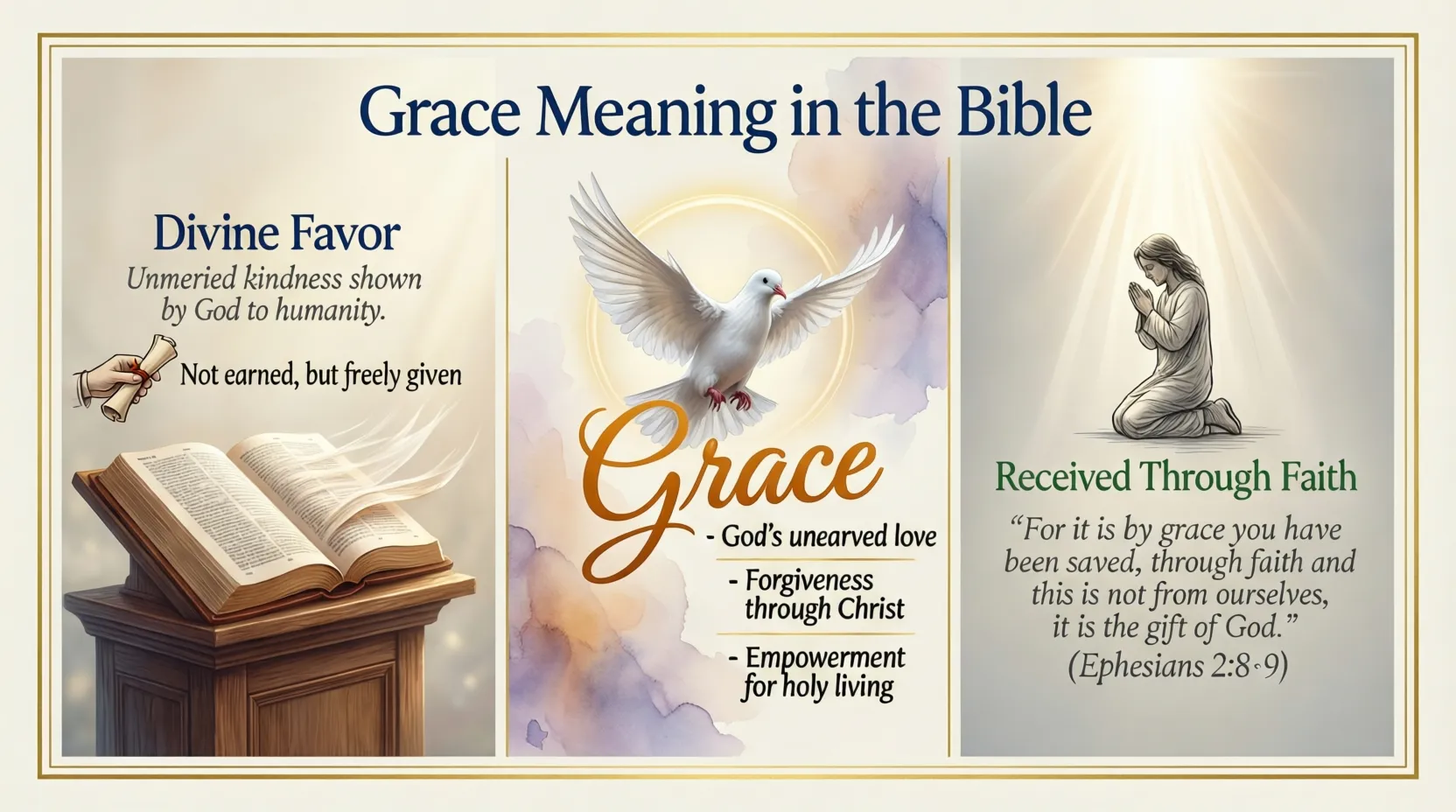
In the Bible, grace means God’s unearned favor. It is love given freely, not because of what we do, but because of who God is.
One of the clearest verses explains this simply:
“For by grace you have been saved through faith. And this is not your own doing; it is the gift of God.”
(Ephesians 2:8)
This verse shows a powerful truth: grace is a gift, not a reward. You cannot buy it, earn it, or prove yourself worthy of it.
Grace in the Old Testament
Grace appears early in Scripture. Even in times of judgment, God shows mercy.
“Noah found grace in the eyes of the Lord.”
(Genesis 6:8)
Noah was not perfect, but God chose to extend grace. This shows that grace has always been part of God’s nature.
Grace in the New Testament
Grace reaches its fullest meaning through Jesus Christ.
“For the law was given through Moses; grace and truth came through Jesus Christ.”
(John 1:17)
Jesus lived grace. He forgave sinners, healed the broken, and welcomed the rejected. Through His sacrifice, grace became the path to salvation.
What Grace Is — and Is Not
Grace is:
- God’s love in action
- Forgiveness without earning
- Strength in weakness
- Hope for the undeserving
Grace is not:
- Permission to sin freely
- A reward for good behavior
- Something we control
Paul warns believers not to misuse grace:
“Shall we continue in sin that grace may abound? By no means!”
(Romans 6:1–2)
Grace changes the heart. It does not excuse sin—it transforms us.
Spiritual Significance and Symbolism
Spiritually, grace represents God’s presence walking with us even when we fall. It is the quiet assurance that we are not alone.
Grace teaches humility. When you realize salvation is a gift, pride fades. You begin to depend on God, not yourself.
Grace also brings spiritual transformation. It softens the heart. It replaces shame with peace. It helps believers grow through prayer, repentance, and faith.
Think of grace like sunlight. You don’t create it. You simply step into it.
In daily life, grace appears when:
- You forgive someone who hurt you
- You feel peace during prayer
- You receive strength during grief
- You keep going when you feel weak
These moments are spiritual messages reminding you that God is near.
Biblical Interpretations in Dreams or Real Life
Sometimes people experience grace in dreams or strong emotional moments. You may dream of light, calm water, open hands, or a gentle voice. These often symbolize God’s mercy and reassurance.
- Peaceful dreams may reflect grace restoring your soul
- Forgiveness themes may signal healing from guilt
- Light or warmth often represent God’s loving presence
In real life, grace may show up unexpectedly—through a second chance, a kind word, or answered prayer.
If the experience brings peace, humility, and hope, it aligns with Christian faith and prayer. Grace always leads closer to God, not farther away.
Practical Lessons & Faith Insights
- Receive grace with gratitude, not guilt
- Extend grace to others through forgiveness
- Trust God when you feel unworthy
- Pray daily for a humble heart
Grace is not something to fear—it is something to rest in.
Conclusion
The meaning of grace in the Bible is simple yet powerful: God loves you freely. Grace saves, heals, and renews the soul. It meets you where you are and gently leads you forward.
When life feels heavy, remember this truth: God’s grace is enough. Seek Him in prayer, walk in faith, and trust that His grace will carry you—today and always.