Have you ever had a dream about fire, darkness, or a place that felt heavy and fearful? Maybe you woke up feeling uneasy and asked yourself, “Was that a warning? What does this mean in the Bible?”
Many people wonder about the hell existence meaning in the Bible. Some think of it only as punishment. Others feel fear when they hear the word “hell.” But the Bible also uses this subject to teach us about God’s justice, mercy, and the need for repentance.
Imagine walking down a road at night. One path is bright and safe. The other leads into deep darkness. A loving father warns his child not to choose the dark road. That warning is not hate—it is love.
In the same way, the Bible talks about hell to guide us toward life, truth, and eternal hope in God.
Hell is not just a scary idea. It carries a strong spiritual message about choices, faith, and our relationship with God. It reminds us that our hearts matter and that God calls us to return to Him.
So, what does hell really mean in Scripture? Is it only about judgment, or is there also hope hidden in the message?
Let’s explore the biblical meaning together.
Biblical Meaning of Hell Existence in the Bible
The hell existence meaning in the Bible is connected to separation from God, judgment for sin, and the importance of salvation through Jesus Christ.
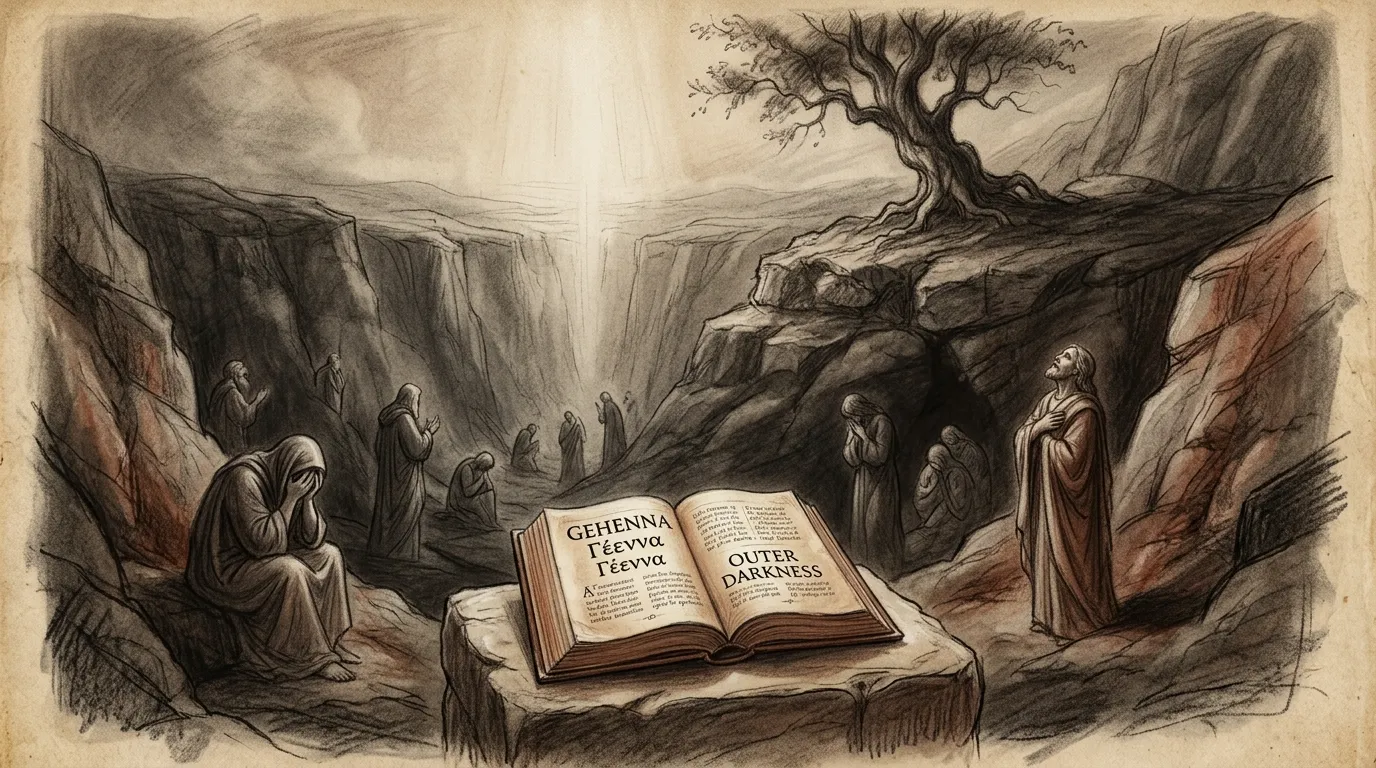
The Bible uses words like Sheol, Hades, and Gehenna to describe places connected to death and judgment.
Hell as Separation from God
One of the deepest meanings of hell is being separated from God’s presence.
God is love, peace, light, and life. To be far from Him means spiritual darkness.
In 2 Thessalonians 1:9, it says:
“They will be punished with everlasting destruction and shut out from the presence of the Lord.”
This shows that hell is not only fire—it is the pain of being away from God.
That is why the Bible urges people to seek Him now.
Hell as a Warning, Not Just Fear
Jesus spoke about hell many times. He did not do this to scare people without reason. He warned people because He loved them.
In Matthew 10:28, Jesus says:
“Be afraid of the One who can destroy both soul and body in hell.”
This reminds us that life is not only about today. Our spiritual choices matter forever.
Hell becomes a warning sign—a call to turn back to God before it is too late.
Hell and God’s Justice
God is loving, but He is also holy and just.
Sin separates people from Him. Without forgiveness, sin leads to judgment.
Romans 6:23 says:
“For the wages of sin is death, but the gift of God is eternal life in Christ Jesus our Lord.”
This verse gives both warning and hope.
Yes, sin has consequences. But God also gives the gift of salvation through Jesus.
Hope Through Jesus Christ
The beautiful part of this message is that hell is not God’s desire for people.
God wants people to be saved.
In John 3:16, we read:
“For God so loved the world that he gave his one and only Son…”
Jesus came so we could have eternal life, not eternal separation.
This means the message of hell is also a message of rescue.
It points us toward grace.
Positive and Warning Meanings
The warning meaning is clear:
Rejecting God leads to spiritual loss.
The positive meaning is also powerful:
Choosing Christ brings peace, forgiveness, and eternal life.
Hell reminds believers to stay close to God and trust His mercy.
It is not meant to remove hope—it is meant to lead us to it.
Spiritual Significance and Symbolism
The spiritual symbolism of hell teaches us about repentance, awakening, and transformation.
Sometimes people go through seasons that feel like emotional darkness—guilt, fear, regret, or distance from God.
This can feel like a personal “hell.”
But often, these moments become the start of healing.
They push us to pray again.
They help us ask deeper questions.
They lead us back to faith.
The story of the prodigal son in Luke 15 shows this beautifully. He walked far from his father and suffered deeply. But when he returned, he found love and mercy.
That is the spiritual lesson.
Hell symbolism reminds us:
Life without God feels empty, but returning to Him brings peace.
It is also a sign of spiritual awakening.
Sometimes God allows discomfort so our hearts can wake up.
Like fire purifies gold, hard moments can shape stronger faith.
This is not punishment alone—it can be transformation.
Biblical Interpretations in Dreams or Real Life
Dreams about hell, fire, darkness, or falling often leave strong emotions behind.
In Christian dream interpretation, these dreams may reflect fear, guilt, spiritual struggle, or a divine warning to return to prayer.
If the dream feels peaceful after repentance, it may be a sign of God calling you closer.
If it feels heavy and frightening, it may point to unresolved sin, spiritual distance, or deep anxiety.
For example:
- Fire may symbolize judgment or purification
- Darkness may represent confusion or distance from God
- Falling may reflect loss of control or spiritual weakness
But not every dream is a direct message from God.
Prayer is important.
Ask God for wisdom, peace, and truth.
Real-life experiences can also carry this symbolism. Feeling lost, empty, or far from faith can reflect spiritual separation—but God always invites us back.
Practical Lessons & Faith Insights
The lesson is simple:
Stay close to God.
Do not let fear control you. Let truth guide you.
Pray, repent, and trust Jesus.
God’s warnings are filled with love.
He does not want you lost—He wants you restored.
Even when life feels dark, His mercy is still reaching for you.
Conclusion
The hell existence meaning in the Bible is more than punishment—it is a powerful reminder of choice, faith, and God’s deep desire to save us.
Hell shows the seriousness of sin, but it also points to the beauty of grace through Jesus Christ.
Its spiritual message is clear:
Choose life. Choose truth. Choose God.
No matter how far someone feels, God’s love is still calling.
With prayer, faith, and repentance, there is always hope—and His light is never too far away.