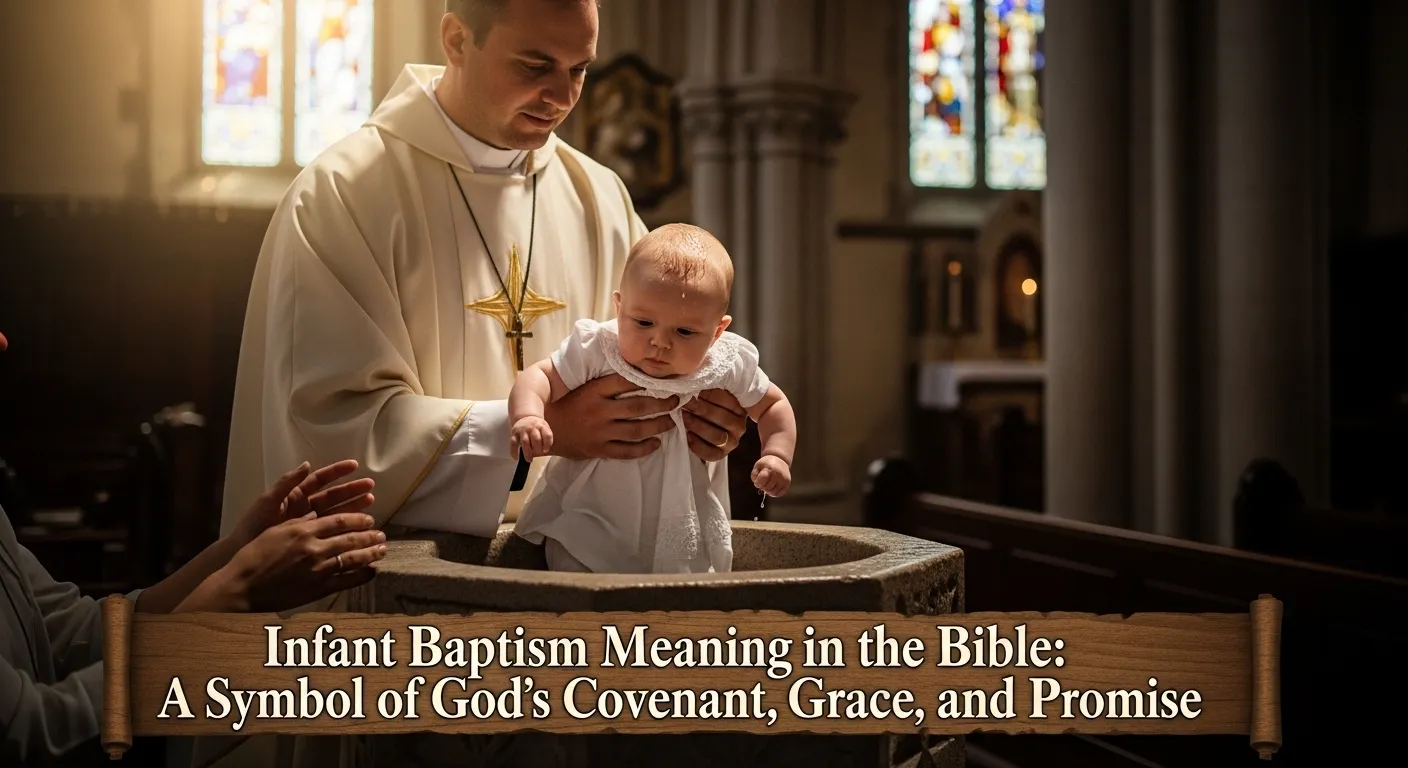
Have you ever watched a baby being baptized and felt a sense of peace fill the room? The gentle touch of water, the loving prayers, and the smiling faces of family members create a beautiful picture of faith and hope. For many Christians, infant baptism is more than a church tradition. It is a meaningful symbol of God’s love and His promises.
Perhaps you have witnessed an infant baptism, dreamed about one, or simply wondered about its deeper meaning. You may ask yourself, “What does infant baptism mean in the Bible?” Is it a sign of salvation, a symbol of faith, or a reminder of God’s covenant with His people?
The Bible speaks often about cleansing, new beginnings, and belonging to God’s family. While Christians may hold different views about infant baptism, many agree that it carries powerful spiritual symbolism connected to God’s grace and care.
Understanding the Infant baptism meaning in the Bible can help believers grow in faith, find comfort in God’s promises, and better understand the spiritual message behind this sacred act. Let us explore what Scripture reveals and how this practice points to God’s loving presence in our lives.
Biblical Meaning of Infant Baptism
The Infant baptism meaning in the Bible is often connected to God’s covenant, grace, and welcome into the community of faith. Although the Bible does not directly describe an infant baptism ceremony, many Christians see biblical principles that support its spiritual significance.
A Sign of God’s Covenant
One of the strongest biblical themes linked to infant baptism is the idea of a covenant. In the Old Testament, God established a covenant with His people through circumcision.
In Genesis 17:7, God told Abraham:
“I will establish my covenant as an everlasting covenant between me and you and your descendants after you.”
Many Christian traditions believe baptism became the New Testament sign of belonging to God’s covenant family.
This understanding highlights God’s initiative. Before a child can choose God, God already extends His love and promises toward that child.
A Symbol of Grace
Infant baptism also represents God’s grace. Grace is God’s undeserved gift of love and mercy.
In Ephesians 2:8, Scripture says:
“For it is by grace you have been saved, through faith.”
Many Christians see infant baptism as a reminder that salvation begins with God’s grace rather than human effort. The child receives a visible sign of God’s love long before understanding it fully.
Jesus Welcomed Children
Another important biblical foundation comes from Jesus’ love for children.
In Mark 10:14, Jesus said:
“Let the little children come to me, and do not hinder them, for the kingdom of God belongs to such as these.”
This verse is often used to show that children have a special place in God’s heart. Infant baptism can symbolize bringing a child into Christ’s loving care and blessing.
Cleansing and New Life
Water is a powerful symbol throughout Scripture. It often represents cleansing, renewal, and spiritual transformation.
Baptism points to the washing away of sin and the beginning of a new life with God.
In Acts 22:16, believers are encouraged to be baptized as a sign of spiritual cleansing. While different churches interpret this differently, the image remains clear: baptism points to God’s work of renewal.
A Reminder of Faith
Some Christians view infant baptism primarily as a declaration by parents and the church community. It reflects a commitment to raise the child in faith and teach God’s Word.
This perspective emphasizes that baptism is not the end of a spiritual journey. Instead, it marks the beginning of a life centered on faith, prayer, and Christian growth.
Different Christian Interpretations
Christians do not all agree on infant baptism.
Some traditions, including many Catholic, Orthodox, Lutheran, and Presbyterian churches, practice infant baptism because they see it as a sign of God’s covenant and grace.
Other Christian groups believe baptism should occur only after a personal profession of faith.
Despite these differences, most Christians agree that baptism carries deep biblical symbolism, pointing people toward Christ, God’s promises, and the hope of salvation.
Spiritual Significance and Symbolism
The spiritual symbolism of infant baptism reaches beyond the ceremony itself. It teaches powerful lessons about God’s character and His relationship with His people.
One important lesson is belonging. Baptism symbolizes being welcomed into God’s family. Just as a loving family embraces a newborn child, God invites people into a relationship with Him.
Another key meaning is hope. Infant baptism reminds believers that God’s plans begin long before we fully understand them. His love reaches into every stage of life.
The act also symbolizes spiritual protection and guidance. Parents often dedicate themselves to raising their child according to biblical values. This creates a strong connection between baptism, prayer, and Christian discipleship.
For many believers, infant baptism represents a journey of faith and transformation. The water symbolizes God’s ongoing work in the heart. As the child grows, they are encouraged to develop a personal relationship with Christ and embrace the promises represented during baptism.
In daily life, this symbolism can inspire believers to trust God’s grace, seek His guidance, and remember His faithful presence through every season.
Biblical Interpretations in Dreams or Real Life
Sometimes people dream about infant baptism or witness one during an important season of life. Such experiences may carry a meaningful spiritual message.
A peaceful dream involving infant baptism may symbolize a new beginning, spiritual growth, or God’s blessing over a new chapter in life. It can point to renewal, hope, and a fresh start.
If the dream feels joyful and calm, it may reflect God’s invitation to trust Him more deeply and embrace His grace.
A more emotional or uncertain dream could symbolize concerns about faith, responsibility, or spiritual direction. It may encourage prayer and reflection rather than fear.
In real life, witnessing an infant baptism often serves as a reminder of God’s covenant love and faithfulness. It can inspire believers to renew their commitment to Christ and remember the importance of nurturing faith within families.
As with all forms of dream interpretation, Christians are encouraged to seek wisdom through prayer, Scripture, and the guidance of the Holy Spirit.
Practical Lessons & Faith Insights
The Infant baptism meaning in the Bible teaches several valuable lessons:
- Trust in God’s grace and loving care.
- Remember that faith is a lifelong journey.
- Pray for spiritual growth in children and families.
- Celebrate God’s covenant promises.
- Seek God’s guidance through Scripture and prayer.
These lessons encourage believers to walk in faith and rely on God’s perfect timing.
Conclusion
The Infant baptism meaning in the Bible points to God’s covenant, grace, love, and invitation into His family. It serves as a beautiful symbol of hope, spiritual renewal, and the promises of God that extend across generations.
Whether you are reflecting on a baptism, studying its biblical roots, or seeking a deeper Christian meaning, this sacred act reminds us that God is always at work in our lives. As you continue your faith journey, may you find comfort in His promises, trust in His guidance, and rest in the assurance of His unfailing love.