Imagine a quiet moment at the end of a long day. The world feels heavy. News is troubling. Your heart is tired. You whisper a prayer, not knowing all the right words—just a deep longing for God to come near.
That feeling, that cry from the soul, is closely tied to one powerful biblical word: Maranatha.
Many Christians come across Maranatha while reading the Bible, hearing it in church, or even sensing it during prayer or a dream. It sounds ancient. Sacred. Almost mysterious. And it naturally raises the question: What does Maranatha mean in the Bible?
This word is more than history. It is more than language. Maranatha carries hope, faith, and a deep spiritual message for believers who are waiting, trusting, and longing for God’s presence. For some, it reflects a season of hardship. For others, it feels like a reminder that Jesus is coming again.
If you have felt drawn to this word—whether through Scripture, reflection, or a spiritual experience—it may be God gently pointing your heart toward hope. Let’s explore the biblical meaning of Maranatha, its spiritual symbolism, and how it connects to your personal journey of faith.
Biblical Meaning of Maranatha
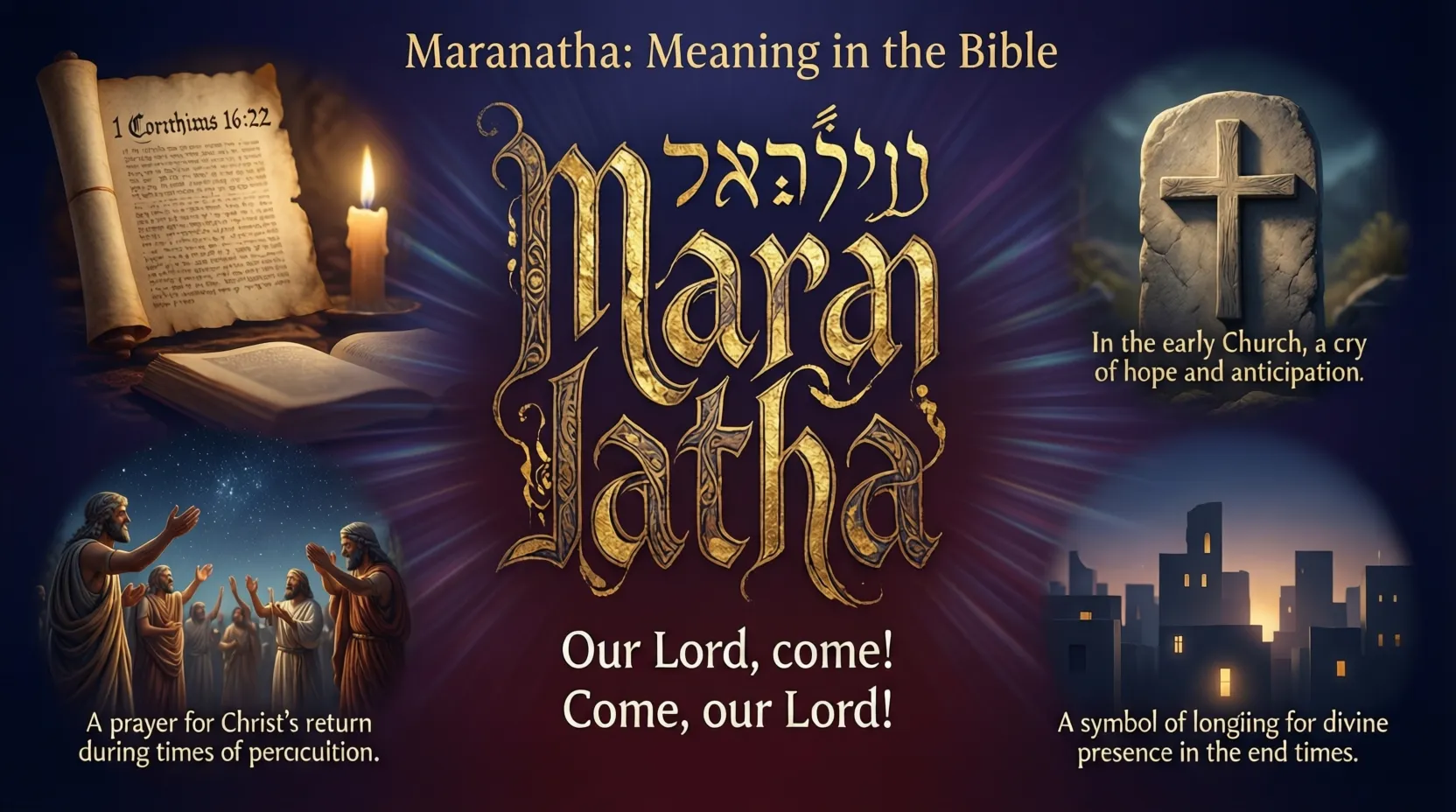
The word Maranatha comes from Aramaic, the everyday language spoken by Jesus and the early Christians. It appears clearly in 1 Corinthians 16:22, where the Apostle Paul writes:
“If anyone does not love the Lord, let that person be cursed! Come, Lord!” (NIV)
The phrase “Come, Lord” is the translation of Maranatha.
What Does Maranatha Mean?
Biblically, Maranatha means “Our Lord, come” or “Come, Lord Jesus.”
It is both a prayer and a proclamation.
- A prayer asking Jesus to return
- A statement of faith that He will return
Early Christians often used Maranatha during persecution. Life was uncertain. Faith was costly. Saying Maranatha was their way of declaring:
“Jesus is Lord, and He is coming back.”
A Message of Hope
In the Bible, Maranatha is filled with hope, not fear. It points to:
- The second coming of Christ
- The end of suffering
- The fulfillment of God’s promises
This aligns closely with Revelation 22:20, where Jesus says:
“Yes, I am coming soon.”
And the church responds:
“Amen. Come, Lord Jesus.”
That response is the heart of Maranatha.
A Gentle Warning and Reminder
There is also a serious tone in 1 Corinthians 16:22. Paul connects Maranatha with loving the Lord. This reminds believers to stay awake in faith, live with love, and remain faithful.
So biblically, Maranatha carries both comfort and responsibility:
- Comfort for believers who trust Christ
- A reminder to live ready for His return
Spiritual Significance and Symbolism
Spiritually, Maranatha symbolizes longing for God’s presence.
It speaks to seasons when:
- Life feels heavy
- Answers feel delayed
- Faith is tested
Saying Maranatha is like opening your heart and saying,
“Lord, I need You—right now and forever.”
A Cry From the Heart
Many Christians experience Maranatha as a spiritual awakening. It often appears when someone is:
- Growing deeper in faith
- Letting go of worldly attachments
- Seeking eternal hope instead of temporary comfort
It reflects a soul that knows this world is not the final home.
Transformation and Trust
Spiritually, Maranatha teaches:
- Patience in God’s timing
- Trust during uncertainty
- Hope beyond present struggles
It encourages believers to shift their focus from fear to faith, from pain to promise.
In daily life, this may look like:
- Whispering Maranatha during prayer
- Feeling peace when thinking about Christ’s return
- Choosing faith even when circumstances are unclear
Biblical Interpretations in Dreams or Real Life
Some people encounter Maranatha in dreams, visions, or moments of deep prayer. In Christian dream interpretation, this word often carries a divine message rather than a literal event.
In Dreams
- Hearing or seeing Maranatha can symbolize spiritual readiness
- It may reflect a desire for closer relationship with God
- It often appears during times of emotional or spiritual change
A peaceful dream connected to Maranatha usually points to hope, reassurance, and God’s presence.
If the dream feels urgent or emotional, it may be a call to return to prayer, faith, or repentance.
In Real Life
When Maranatha stands out in worship, Scripture, or reflection, it can mean:
- God is reminding you that He is in control
- Your heart is being drawn toward eternal hope
- You are being invited to live with faith and expectation
Always ground these experiences in prayer and Scripture, asking God for clarity and peace.
Practical Lessons & Faith Insights
Maranatha teaches us to live with hope.
It reminds believers to:
- Pray daily and trust God’s timing
- Stay faithful during waiting seasons
- Fix their eyes on Christ, not fear
Let Maranatha become a gentle prayer in your heart:
“Lord, I trust You. Come into my life, my struggles, and my future.”
Conclusion
The meaning of Maranatha in the Bible is simple, yet deeply powerful. It is a cry of faith, a prayer of hope, and a reminder that Jesus is coming again. Whether you encountered this word through Scripture, prayer, or a spiritual moment, it carries a message of comfort and assurance.
In every season—joyful or difficult—Maranatha invites you to trust God’s promises and live with hope. May your heart find peace in knowing that the Lord is near, and His timing is always perfect.