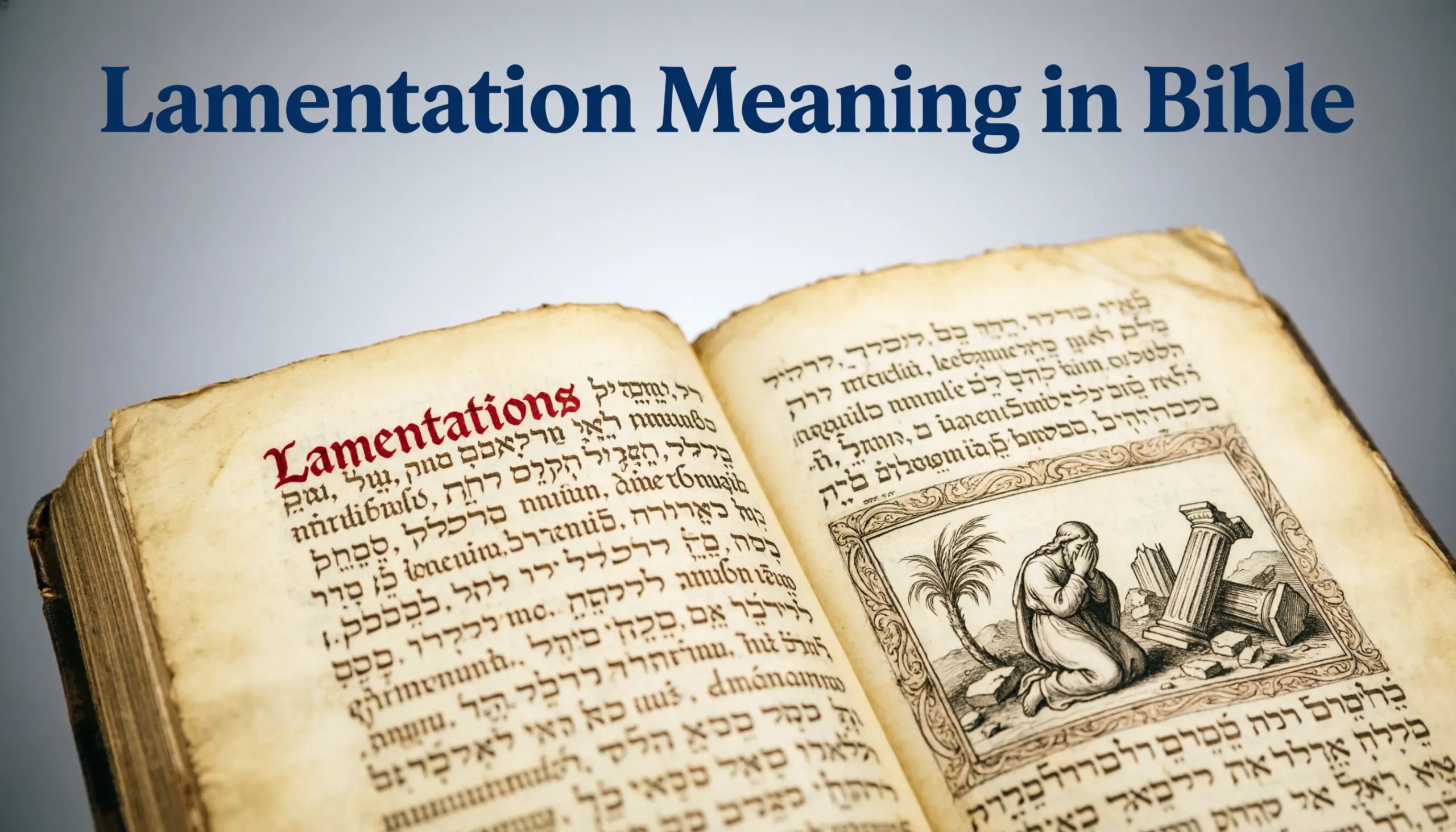
Have you ever cried out to God in deep pain?
Maybe it was late at night. The house was quiet. Your heart felt heavy. You did not have fancy words. You only had tears.
That feeling is close to lamentation.
In the Bible, lamentation is not just sadness. It is not weak faith. It is not doubt. It is a deep cry from the heart to God.
Think of a person sitting alone, whispering, “Lord, why?”
That whisper is powerful. It is honest. It is real.
Many people search for the lamentation meaning in Bible because they feel grief, loss, or confusion. They want to know:
- Is it okay to cry before God?
- Does God hear my pain?
- Is there hope after sorrow?
The Bible shows us that lamentation is part of faith. It is a spiritual message of honesty, trust, and hope.
Let us explore what lamentation truly means in the Bible and how it connects to your own journey with God.
Who Lamented in the Bible?
Many people in the Bible offered laments—honest prayers or cries of sorrow, grief, confusion, or distress directed to God. These laments show that faith includes bringing pain to God, not hiding it.
Prayers of Lament in the Bible
Prayers of lament are heartfelt prayers where a person cries out to God in pain, confusion, grief, fear, or distress. In the Bible, lament is not a lack of faith—it is actually a deep expression of trust, because the person brings their suffering directly to God instead of turning away from Him.
Lament is one of the most common prayer forms in Scripture, especially in the Psalms.
Lament Hebrew Meaning
In Hebrew, the word “lament” is not just about crying or sadness—it refers to a deep expression of grief, mourning, or wailing, often directed toward God in times of suffering, loss, or national tragedy.
📜 Main Hebrew Words for “Lament”
1. Qinah (קִינָה)
Pronunciation: kee-NAH
This is the most important Hebrew word for lament.
Meaning:
- A funeral dirge (song of mourning)
- Poetic expression of grief
- Cry of sorrow over loss or disaster
It is often used in the Book of Lamentations (Eikhah).
2. Avel (אֵבֶל)
Pronunciation: EH-vel
Meaning:
- Mourning
- Deep grief
- Period of sorrow after death
This refers more to the state of mourning, not just the expression of it.
3. Naqah / Naakah (נְאָקָה)
Meaning:
- Groaning
- Sighing under distress
- Crying out in pain
This word focuses on the emotional sound of suffering.
📖 Biblical Example of Lament
Lamentations 1:1 (Hebrew book: Eikhah)
“How lonely sits the city…”
The Hebrew title of Lamentations is “Eikhah (אֵיכָה)”, meaning:
“How…” — a word of shock and grief
This reflects the tone of qinah (lament poetry).
Lamentation Meaning in the Bible (Tagalog)
Sa Biblia, ang salitang “lamentation” ay tumutukoy sa malalim na pagdadalamhati, pag-iyak, at pag-ungol ng puso dahil sa matinding kalungkutan, pagkawasak, o pagdurusa. Ito ay hindi lang simpleng pag-iyak, kundi isang taos-pusong pagdarasal na puno ng sakit at hinanakit sa harap ng Diyos.
📖 Kahulugan ng Lamentation sa Biblia
Ang lamentation ay:
- Pagluluksa o pagdadalamhati
- Taos-pusong pag-iyak sa Diyos
- Pagpapahayag ng sakit at dalamhati
- Panalangin sa gitna ng paghihirap
- Pag-amin ng lungkot, takot, o pagkasira ng buhay
📜 Halimbawa sa Biblia
📘 Aklat ng Lamentations (Panaghoy)
Sa Tagalog Biblia, ang Lamentations ay tinatawag na “Panaghoy”.
Lamentations 1:1
“Kay lungkot ng lungsod na dating punô ng tao…”
Ito ay nagpapakita ng:
- Pagkawasak ng Jerusalem
- Matinding kalungkutan ng bayan ng Diyos
- Panaghoy dahil sa kasalanan at paghihirap
🌿 Hebrew na Kahulugan (Pinagmulan)
Ang “lamentation” ay galing sa Hebrew na:
- Qinah (קִינָה) – awit ng pagluluksa o panaghoy
- Avel (אֵבֶל) – pagluluksa o mourning
Ibig sabihin, ito ay poetikong paraan ng pag-iyak at pagdarasal sa Diyos.
✝️ Espirituwal na Kahulugan
Sa pananampalataya, ang lamentation ay:
- Paglapit sa Diyos sa gitna ng sakit
- Pagpapahayag ng totoong damdamin
- Hindi pagkawala ng pananampalataya, kundi pag-asa sa Diyos kahit may dalamhati
- Panalangin na puno ng katapatan
💫 Mahalagang Aral
Ang lamentation sa Biblia ay nagtuturo na:
Maaari tayong umiyak at magtanong sa Diyos, at Siya ay nakikinig.
📌 Buod
Ang lamentation meaning in the Bible (Tagalog) ay malalim na pagdadalamhati o panaghoy sa harap ng Diyos, na ipinapahayag sa pamamagitan ng panalangin, pag-iyak, at paghingi ng tulong sa gitna ng matinding pagsubok o pagkawala.
Biblical Meaning of Lamentation
The lamentation meaning in Bible is simple yet deep. It means a heartfelt cry of sorrow, grief, or regret spoken to God.
Lamentation is not just crying. It is crying with faith.
In the Old Testament, we see this clearly in the book of
Book of Lamentations.
This book was written after Jerusalem was destroyed. The people felt broken. Their city was gone. Their temple was burned. Everything looked lost.
Yet in the middle of that sorrow, we read these powerful words:
“Because of the Lord’s great love we are not consumed, for His compassions never fail.” – Lamentations 3:22
Even in pain, there was hope.
Lamentation in the Psalms
Another strong example is in the
Book of Psalms.
Many psalms are prayers of lament. For example:
- “My God, my God, why have You forsaken me?” (Psalm 22:1)
- “How long, Lord? Will You forget me forever?” (Psalm 13:1)
These words are honest. They show confusion and sadness. But they always turn back to trust.
This is key in biblical symbolism:
- Sorrow is real.
- God allows honesty.
- Hope follows pain.
Lamentation Is Not Weak Faith
Some people think crying to God means they lack faith. But the Bible teaches the opposite.
Lamentation shows:
- Trust – You still go to God.
- Faith – You believe He hears you.
- Relationship – You speak openly to Him.
Even Jesus showed lament. On the cross, He cried out words from Psalm 22. That moment shows us that lamentation can be holy.
Warning and Comfort
Lamentation also carries a warning meaning in Scripture.
Sometimes it comes after sin or rebellion. The destruction of Jerusalem happened because the people turned away from God.
In this sense, lamentation can mean:
- A call to repentance
- A time of reflection
- A chance for spiritual awakening
But the message never ends in darkness.
The true Christian meaning of lamentation is this:
God listens. God restores. God brings hope after grief.
Spiritual Significance and Symbolism
The spiritual symbolism of lamentation is powerful.
It represents:
- Cleansing of the heart
- Healing through tears
- Growth through pain
- Closer connection with God
When you hold pain inside, it becomes heavy. But when you bring it to God in prayer, something changes.
Lamentation is like a storm that washes the soul.
After the storm, there is quiet. There is peace.
A Path to Transformation
In many Christian journeys, lament comes before transformation.
You may lose something important:
- A job
- A relationship
- A dream
In that moment, you cry to God.
That cry becomes the start of spiritual awakening.
The Bible shows that sorrow often leads to renewal. Pain softens the heart. It teaches humility. It builds deeper faith.
Through lamentation, believers learn:
- To depend on God
- To trust His timing
- To wait for His guidance
It becomes a divine message saying, “Do not run away. Come closer.”
Biblical Interpretations in Dreams or Real Life
Sometimes people experience lamentation in dreams. They may dream of crying, mourning, or grieving.
In dream interpretation from a Christian view, this can mean:
- The heart needs healing
- God is calling you to release pain
- A season is ending
- Spiritual growth is beginning
If the dream feels peaceful, it may show that God is comforting you.
If the dream feels dark or fearful, it may be a sign to pray more deeply and seek God’s presence.
In real life, lamentation may appear during:
- Loss of a loved one
- Big life changes
- Personal failure
But even then, the presence of God is near.
Psalm 34:18 says:
“The Lord is close to the brokenhearted.”
That is the heart of the spiritual message.
You are never alone in your sorrow.
Practical Lessons & Faith Insights
Here are simple faith lessons from the lamentation meaning in Bible:
- Pray honestly. God can handle your tears.
- Do not hide pain. Bring it into the light.
- Trust God’s mercy. Sorrow does not last forever.
- Wait with hope. Healing takes time.
Lamentation is not the end of your story. It is part of your growth.
Conclusion
The lamentation meaning in Bible teaches us that sorrow and faith can walk together.
It shows that crying out to God is not weakness. It is trust.
Through lamentation, we learn that:
- God listens.
- God cares.
- God restores.
If you are in a season of tears, do not lose hope. Let your prayer rise. Let your heart speak.
In the middle of sorrow, God is already preparing comfort, renewal, and deeper faith.
Stay close to Him. Hope is coming.