Imagine walking into a room where people are divided into groups. Some are welcomed with smiles, while others are ignored because they look different. It can feel painful and unfair. Sadly, racism has been part of human history for a long time. Many people wonder, what is the racism meaning in the Bible? Does God view people differently because of their race, color, or background?
The Bible speaks clearly about God’s love for all people. From the beginning of creation, every person was made in God’s image. Yet throughout history, prejudice, hatred, and discrimination have caused deep wounds among individuals and communities.
When people search for the biblical meaning of racism, they are often looking for more than a definition. They want to understand God’s perspective. They may be seeking healing from past hurts, guidance for current struggles, or wisdom about how to treat others with love and respect.
The Bible offers a powerful and hopeful message. It teaches that all people have equal value before God. It also warns against pride, hatred, and judging others based on outward appearance.
So, what does racism mean in the Bible, and what spiritual lessons can Christians learn from it? Let’s explore the Scriptures and discover God’s heart for unity, love, and reconciliation.
Biblical Meaning of Racism
The Bible does not use the modern word “racism,” but it strongly speaks against the attitudes and actions that racism represents.
At its core, racism involves treating someone as less valuable because of their race, ethnicity, or background. The Bible teaches the exact opposite. Every person is created by God and carries His image.
All People Are Made in God’s Image
One of the most important truths in Scripture is found in:
“So God created mankind in his own image.” (Genesis 1:27)
This verse shows that every human being has God-given worth and dignity. No race is superior to another because all people share the same Creator.
From a Christian meaning perspective, racism contradicts God’s design because it denies the equal value He has placed on every person.
God Shows No Favoritism
The Bible repeatedly teaches that God does not judge people by their race, nationality, or social status.
Acts 10:34-35 says:
“God does not show favoritism but accepts from every nation the one who fears him and does what is right.”
This was a powerful message in the early church. God wanted His people to understand that His love extends to every nation and every culture.
This passage reveals an important spiritual message: God’s grace is available to all people.
Jesus Broke Cultural Barriers
During His earthly ministry, Jesus often crossed social and ethnic boundaries.
One example is His conversation with the Samaritan woman in John 4. Jews and Samaritans were deeply divided, yet Jesus treated her with kindness, respect, and compassion.
This story teaches that true faith removes barriers and brings people together.
Jesus demonstrated that God’s love reaches beyond race, nationality, and human divisions.
Racism as a Warning Sign
The Bible warns against hatred, prejudice, and pride.
1 John 4:20 says:
“Whoever claims to love God yet hates a brother or sister is a liar.”
Hatred toward others is incompatible with genuine Christian faith.
Racism often grows from fear, pride, ignorance, or prejudice. Scripture encourages believers to replace these attitudes with love, humility, and understanding.
Unity in Christ
One of the most beautiful teachings about equality appears in Galatians 3:28:
“There is neither Jew nor Gentile… for you are all one in Christ Jesus.”
This verse does not erase cultural differences. Instead, it teaches that all believers share equal standing before God.
The biblical symbolism found here points to unity, acceptance, and spiritual family.
God’s Vision for All Nations
The Bible’s final picture of heaven includes people from every background worshiping together.
Revelation 7:9 describes:
“A great multitude that no one could count, from every nation, tribe, people and language.”
This vision reveals God’s desire for unity among diverse peoples.
The presence of God brings people together rather than dividing them.
Spiritual Significance and Symbolism
The spiritual symbolism connected to racism often centers on the human heart.
In Scripture, outward differences are less important than inward character. God looks beyond appearances and sees the heart.
When Christians confront racism, they are also confronting deeper spiritual issues such as pride, judgment, fear, and selfishness.
The Bible invites believers into a journey of transformation.
Instead of seeing people through human labels, Christians are called to see them through God’s eyes.
For example, a person may feel tempted to judge someone because they come from a different culture. Through prayer and spiritual growth, God can replace those feelings with compassion and understanding.
This process reflects a spiritual awakening. The believer begins to recognize that God’s love extends to every person.
Another spiritual lesson is reconciliation. Throughout the Bible, God works to restore broken relationships. Racism creates division, while God’s Spirit encourages healing and unity.
As Christians grow in faith, they learn to celebrate diversity as part of God’s creative design.
The deeper divine message is that love is stronger than prejudice, and grace is stronger than division.
Biblical Interpretations in Dreams or Real Life
In some cases, people may dream about racism, discrimination, or conflict between different groups.
A dream interpretation from a biblical perspective should focus on the emotions and spiritual lessons involved rather than predicting future events.
If the dream feels painful or hostile, it may reveal wounds, fears, or unresolved struggles that need healing through prayer.
It could also serve as a reminder to examine personal attitudes and seek God’s guidance.
If the dream shows reconciliation, friendship, or unity between different groups, it may symbolize spiritual growth, forgiveness, and God’s work of restoration.
In real life, experiences involving racism can become opportunities for faith, courage, and compassion.
Christians are called to respond not with hatred but with wisdom, truth, and love.
Prayer can help believers navigate difficult situations while trusting God to bring justice and healing.
The Bible consistently points people toward peace, understanding, and reconciliation.
Practical Lessons & Faith Insights
Here are a few faith-based lessons Christians can apply:
- Remember that every person is made in God’s image.
- Pray for a heart that reflects Christ’s love.
- Reject prejudice, favoritism, and hatred.
- Seek understanding when encountering different cultures.
- Show kindness and respect to everyone.
- Trust God to heal divisions and bring unity.
Small acts of love can reflect God’s powerful work in the world.
Conclusion
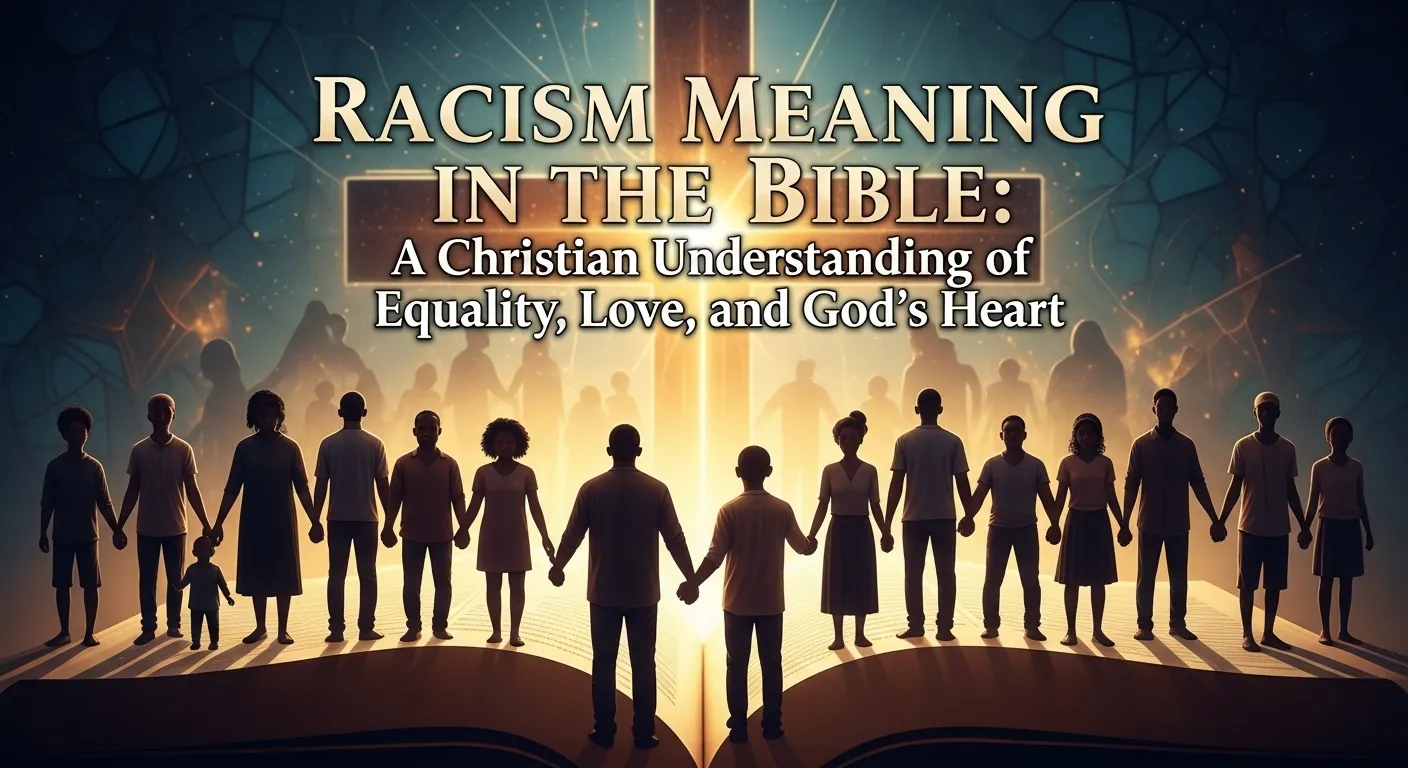
The racism meaning in the Bible is closely connected to God’s call for love, equality, and unity. Scripture teaches that all people are created in His image and are deeply valued by Him. Racism stands against God’s design because it creates division where He desires reconciliation.
Through faith, prayer, and the transforming work of Christ, believers can overcome prejudice and grow in compassion. The Bible’s message is one of hope: people from every nation, tribe, and language are welcomed into God’s family. As you seek God’s guidance, may His love help you see others through His eyes and walk in the peace, grace, and unity He desires for all.